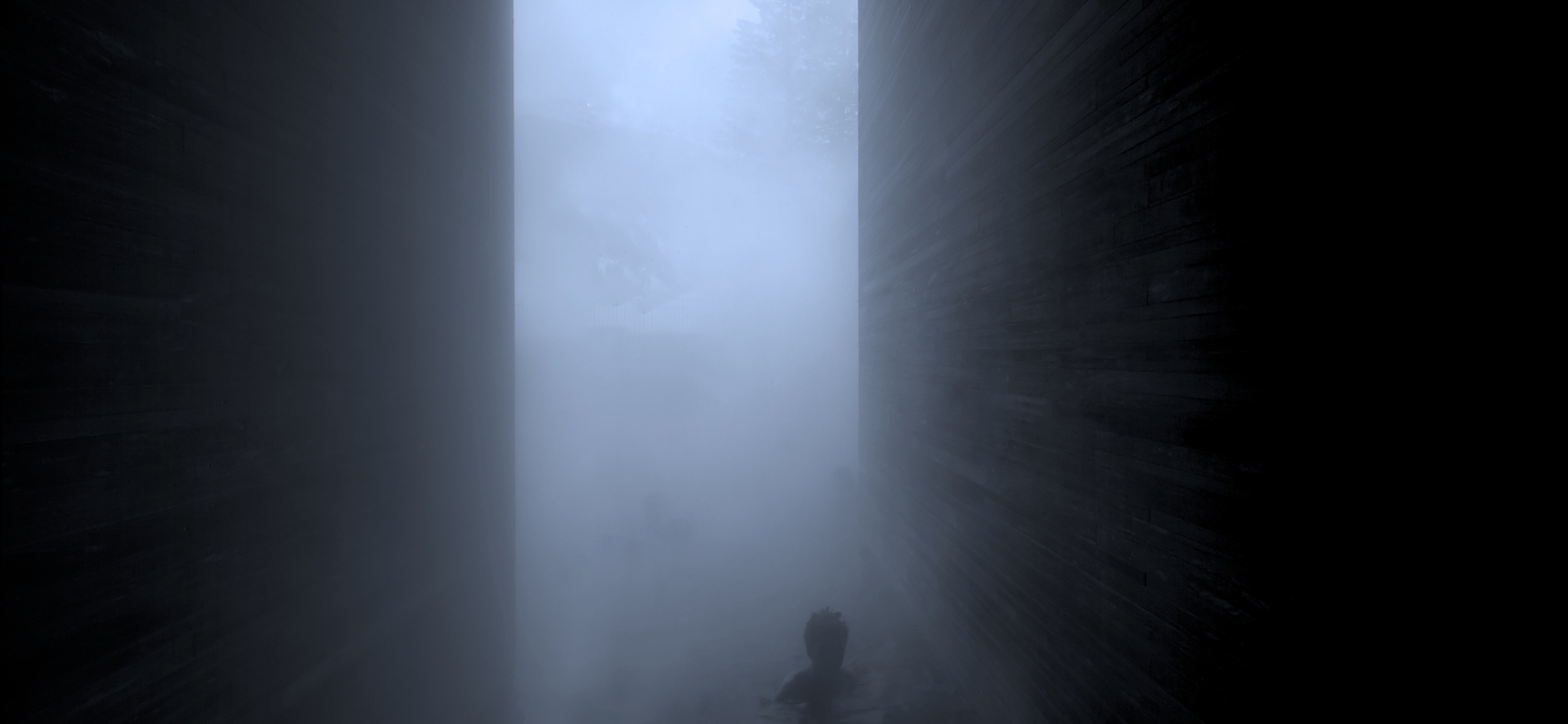
"By operating with only five notes, the pentatonic scale establishes a stable and intuitive musical system in which structural clarity allows for variation without the risk of excessive dissonance. From this consolidated structure, which forms the basis of countless musical styles, especially popular music, the blues introduced a decisive inflection by incorporating additional notes into the scale. Without delving into excessive technicalities, these are subtle tonal deviations,"
"small dissonances often associated with a more melancholic sound, known as . Played fleetingly rather than as emphatic accents, they briefly tension the system, adding expressiveness and depth while keeping the underlying structure intact. If in music the blues scale operates through a subtle deviation that "seasons" the underlying structure, a similar principle can be identified in architecture. Although comparisons between different"
The pentatonic scale uses five notes to create a stable, intuitive musical system where structural clarity permits variation without excessive dissonance. The blues adds decisive inflections by incorporating additional notes into that scale, producing subtle tonal deviations often linked to a melancholic sound. These deviations are played fleetingly rather than as emphatic accents, briefly tensioning the system and adding expressiveness while preserving the underlying structure. A parallel exists in architecture where projects derive expressiveness from localized inflections within clear systems of modulation, subtraction, materiality, or typology. Localized displacements and asymmetries act as internal tensions that maintain overall coherence. Expressiveness thus emerges from controlled deviation rather than permanent exception.
Read at ArchDaily
Unable to calculate read time
Collection
[
|
...
]