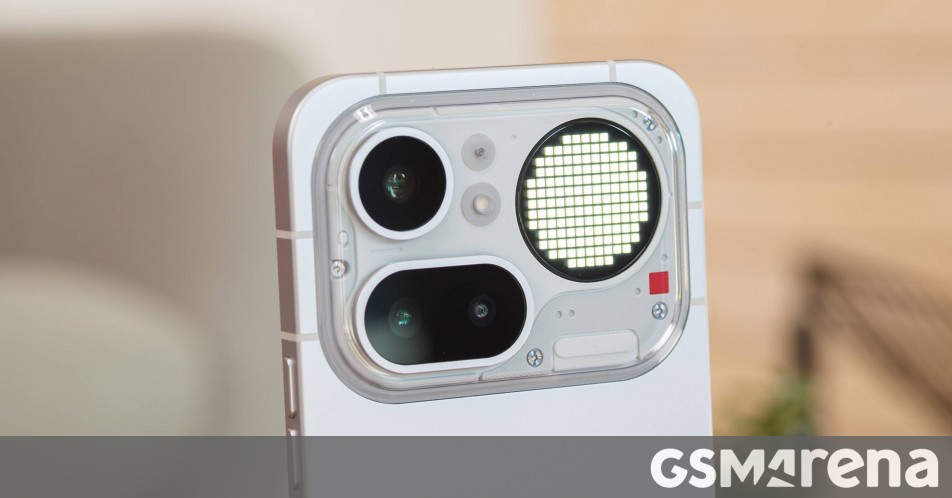
The Nothing Phone (4a) Pro and vanilla (4a) present distinct differences in design and features. The Pro features a circular Glyph Matrix display with 137 LEDs versus the regular's simple bar with 63 LEDs, enabling advanced animations and caller identification. Build materials differ significantly: the Pro uses a metal unibody construction while the vanilla has a plastic body, both maintaining similar weight but the Pro being slightly thinner at under 8mm. The Pro's display is larger at 6.83 inches, brighter, and refreshes at 144Hz compared to 120Hz. Both phones ship with USB-C cables, transparent cases, and SIM tools. The Pro comes in three colors and storage configurations starting at €480.
"The flashiest comparison revolves around the Glyph interface - it's a simple Glyph bar on the non-Pro and a full-on circular dot matrix display on the Pro. Getting technical for a bit, the Pro has 137 LEDs, while the regular has just 63. As you can imagine, you can do all sorts of clever stuff with the Glyph Matrix on the Nothing Phone (4a) Pro - animating your timer, different callers, you can even use it as a selfie display for the main camera."
"Probably the bigger differentiator between (4a) phones is the build materials. The vanilla has a plastic body, while the Pro ups the stakes to a full metal unibody. It's the same weight as the plastic phone, but is a few millimeters thinner at just under 8mm."
"We like a phone made of metal here at GSMArena. The Nothing Phone (4a) Pro earns its moniker and feels premium and refined. It doesn't feel as large as its 6.83-inch display would have you believe."
#nothing-phone-4a-pro #glyph-matrix-display #metal-unibody-design #smartphone-comparison #display-technology
Read at GSMArena.com
Unable to calculate read time
Collection
[
|
...
]