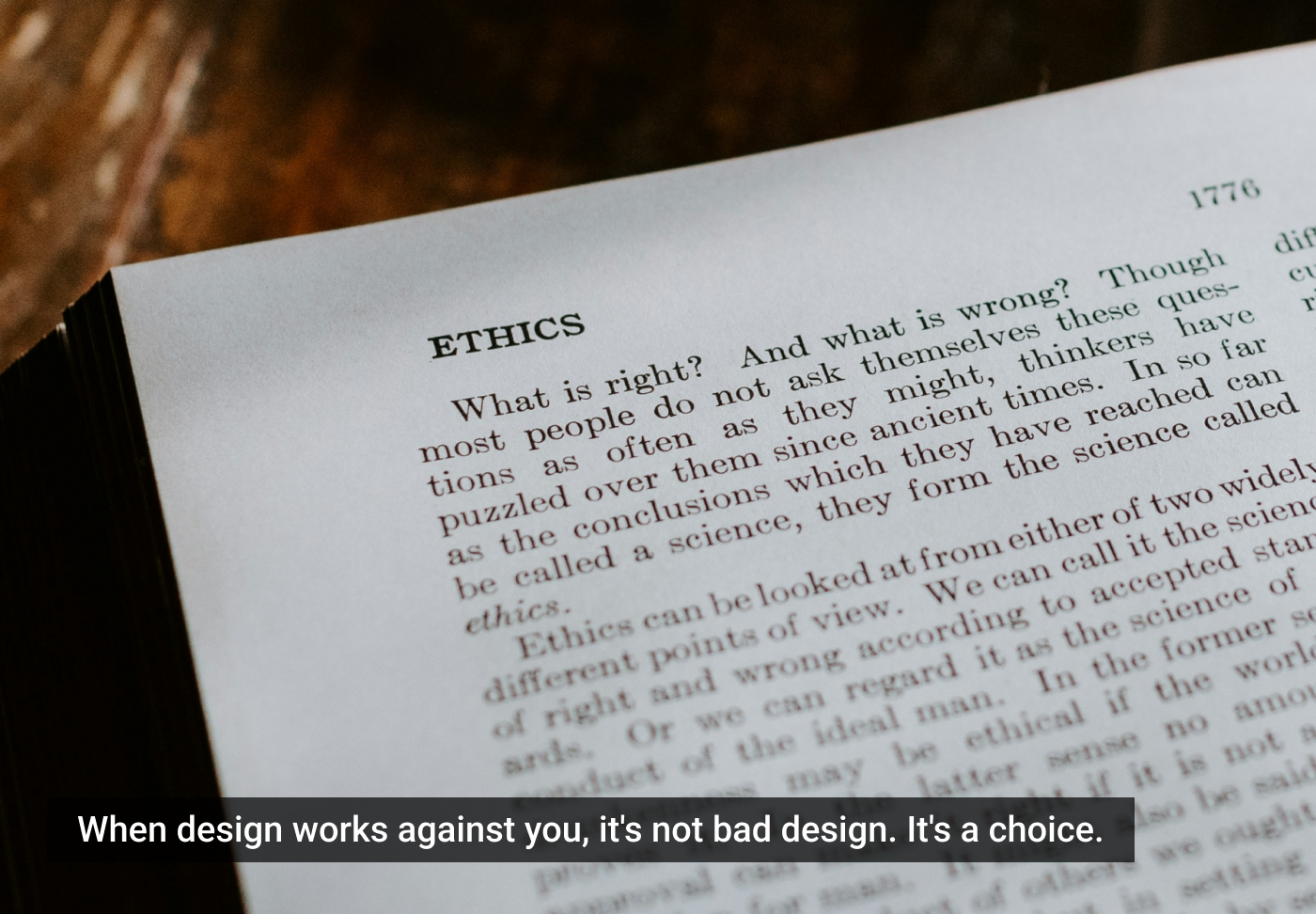
"Dark patterns are design practices that intentionally mislead or manipulate users into taking actions they might not otherwise choose. Unlike bad design, which is unintentionally confusing or frustrating, dark patterns are deliberately crafted to exploit users' cognitive biases, insecurities, or lack of information."
"From sneaky auto-enrolled subscriptions to deceptive "X" buttons that don't really close pop-ups, dark patterns erode trust, exploit cognitive biases, and manipulate behavior. Their effects are not just irritating - they're potentially dangerous, leading users to unknowingly share personal data, make unintended purchases, or agree to terms they don't understand."
"While some designers argue it's all part of conversion optimization, the human cost - lost trust, damaged digital literacy, and user disempowerment - makes it a design crime, not cleverness."
Dark patterns represent deliberate design practices that mislead users into actions contrary to their interests, distinguishing themselves from unintentional bad design through calculated exploitation of cognitive biases. These manipulations range from deceptive subscription enrollments to misleading interface elements, causing tangible harm including unauthorized data sharing, unintended purchases, and misunderstood agreements. While some designers justify dark patterns as conversion optimization tactics, the consequences—diminished user trust, compromised digital literacy, and user disempowerment—constitute ethical violations. Understanding dark patterns requires examining their identification, legal implications, and ethical design alternatives that prioritize transparency and user autonomy over business manipulation.
Read at UX Magazine
Unable to calculate read time
Collection
[
|
...
]