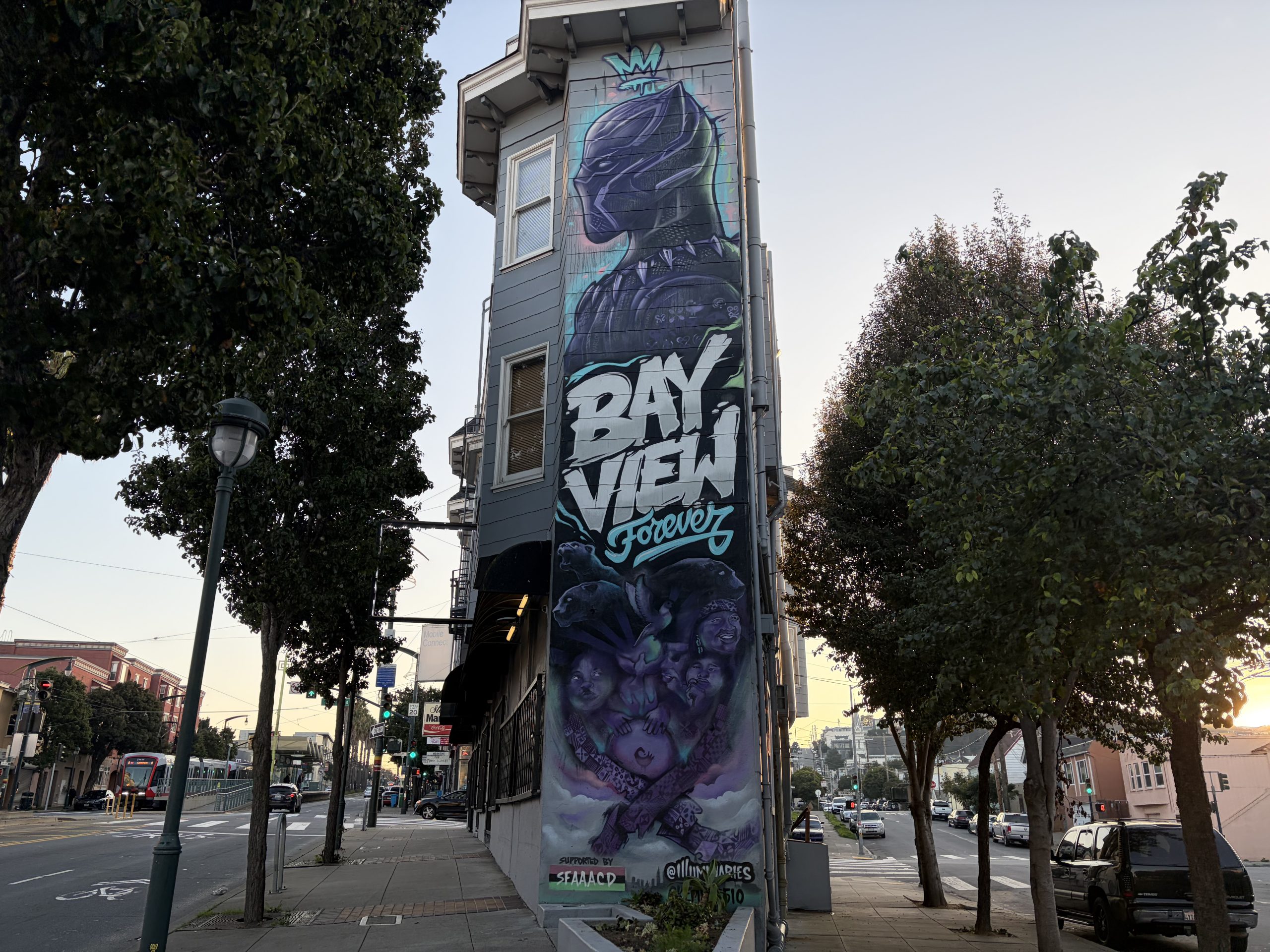
"The businesses and to a large extent that corridor hasn't adapted to provide the kind of services that is more reflective of the community. There are no Asian grocery stores on Third Street, for example, and many residents travel outside of the neighborhood for basic needs, resulting in retail leakage."
"Prior to the pandemic, the sprawling southeastern neighborhood had one of the fastest-growing commercial corridors and had begun to garner attention as an affordable, desirable location for restaurants in a city with notoriously high rent. But since the pandemic, it has struggled to retain legacy businesses or attract new ones to Third Street."
"The first came in 2007 when foot traffic, and with it, the neighborhood's sales, increased dramatically after the city installed the T-line, connecting the formerly isolated neighborhood to the rest of the city. The second started as demographic changes in the previously majority Black neighborhood continued."
Bayview-Hunters Point, a San Francisco neighborhood, remains economically stalled with sales tax revenue still $100,000 below pre-pandemic levels. Once a thriving commercial corridor after the 2007 T-line installation, the neighborhood now faces significant challenges. Demographic changes have transformed the previously majority-Black neighborhood into one that is largely Asian and Hispanic, with Black residents comprising only 23 percent. However, Third Street businesses have not adapted to serve the new community composition. Critical retail gaps exist, including no Asian grocery stores, resulting in residents traveling elsewhere for basic needs. Essential businesses like Telos Coffee, Lucky's, Walgreens, and all pharmacies have closed, leaving only four grocery stores, one exclusively for low-income residents. Vacant storefronts now characterize the corridor.
#economic-recovery #demographic-change #retail-decline #community-mismatch #urban-neighborhood-development
Read at Mission Local
Unable to calculate read time
Collection
[
|
...
]