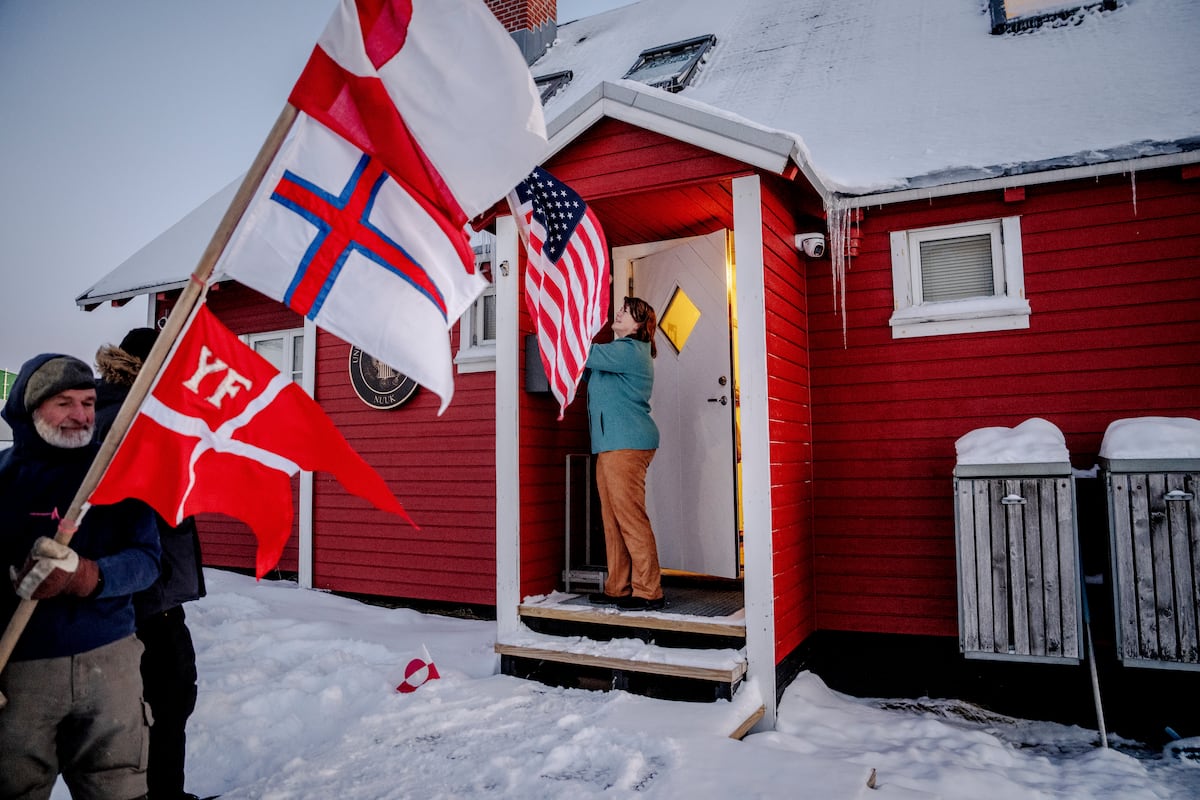
"Denmark and seven other European countries sent small contingents of troops to Greenland last week in a largely symbolic gesture to participate in military exercises on the vast Arctic island that Donald Trump covets. The U.S. president announced tariffs of up to 25% on these eight allies if they did not cease opposing his plan to control Greenland, although he withdrew the threat on Wednesday. I would like to make a deal, you know, the easy way, but if we don't do it the easy way, we're going to do it the hard way, Trump warned on January 9."
"Shortly beforehand, the Republican had openly questioned Danish sovereignty over the island: There are no written documents, it's only that a boat landed there hundreds of years ago, but we had boats landing there, also. I won't use force, the Republican declared Wednesday during his address at the Davos Economic Forum in Switzerland, where he insisted on the need to control Greenland. In the event of a U.S. invasion, Danish soldiers must engage in combat without waiting for orders, according to a 1952 military directive that the Danish Ministry of Defense has confirmed remains in effect."
"Copenhagen's control of the world's largest island does not date back half a millennium, as Trump suggests, but to just over three centuries. The first inhabitants of Greenland Paleo-Inuits arrived around 4,500 years ago. From the 10th century onwards, Norse explorers and settlers established themselves in coastal areas, but all communities of European origin had disappeared by the end of the Middle Ages. In 1721, Lutheran missionary Hans Egede led an expedition to Greenland from the then-Kingdom of Denmark and Norway with the aim of evangelizing the Indigenous population."
Small contingents from Denmark and seven European countries participated in military exercises in Greenland as a symbolic response to U.S. interest. The U.S. president threatened tariffs of up to 25% on allies opposing a U.S. plan to control Greenland, then withdrew the threat. The U.S. president issued direct warnings about pursuing the matter hard if necessary and publicly questioned Danish sovereignty. A 1952 Danish military directive requires soldiers to engage without waiting for orders in the event of invasion. Greenland's habitation history spans Paleo-Inuit settlement, Norse exploration, and Danish colonial control beginning in the early 18th century.
Read at english.elpais.com
Unable to calculate read time
Collection
[
|
...
]