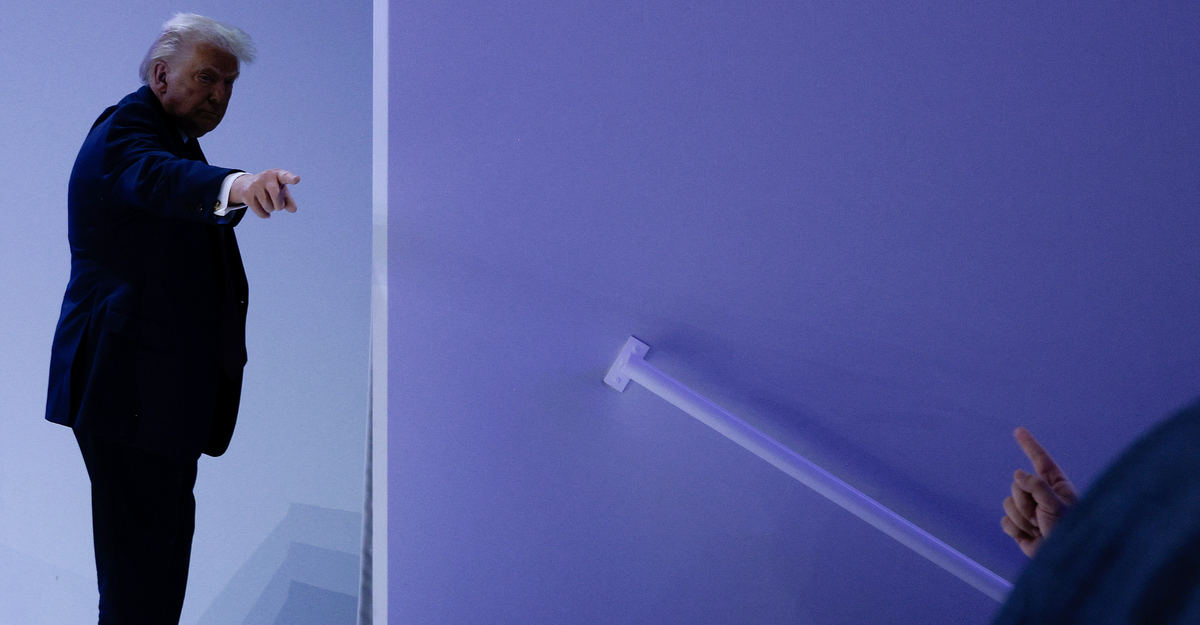
"When European Union leaders agreed to gather yesterday, the plan was to ready their response to President Trump's tariff threat, an outgrowth of his insistence that the United States take over the territory of one of their members. But the day before they met, Trump backed down, spectacularly. He swore off further tariffs and embraced terms for negotiations about Greenland, the Arctic territory he covets, that bear little resemblance to his maximalist demands for ownership."
"The sense of relief, however, belied a new reality. So the European summit in Brussels was anticlimactic. The worst had already been avoided. "We began the week with a form of escalation-threats, invasion threats and tariff threats-and we have returned to a situation that seems much more acceptable," French President Emmanuel Macron remarked as he arrived yesterday evening at the Europa building, the seat of the European Council."
"After years of insults and ultimatums aimed by Trump at Europe, the fiasco arising from his far-fetched campaign to acquire Greenland has undermined America's relationships with some of its richest and most powerful allies-perhaps permanently. One senior European diplomat told us about a "significant and probably irreversible rupture" between Europe and the United States. Another official said that European countries are continuing to compile lists of sectors in which they could create leverage and "hit the Americans if they try something like this again.""
European Union leaders convened to prepare a response to U.S. tariff threats tied to President Trump's push to acquire Greenland. Trump unexpectedly backed down the day before the meeting, renouncing tariffs and accepting negotiation terms that fell far short of his earlier ownership demands. The Brussels summit was anticlimactic because the immediate crisis had passed. The episode nonetheless weakened transatlantic trust; diplomats described a significant, possibly irreversible rupture. European governments are compiling lists of economic leverage, discussing retaliatory options, and reconsidering independent security measures, including strengthening nuclear deterrence beyond reliance on the U.S. umbrella.
Read at The Atlantic
Unable to calculate read time
Collection
[
|
...
]