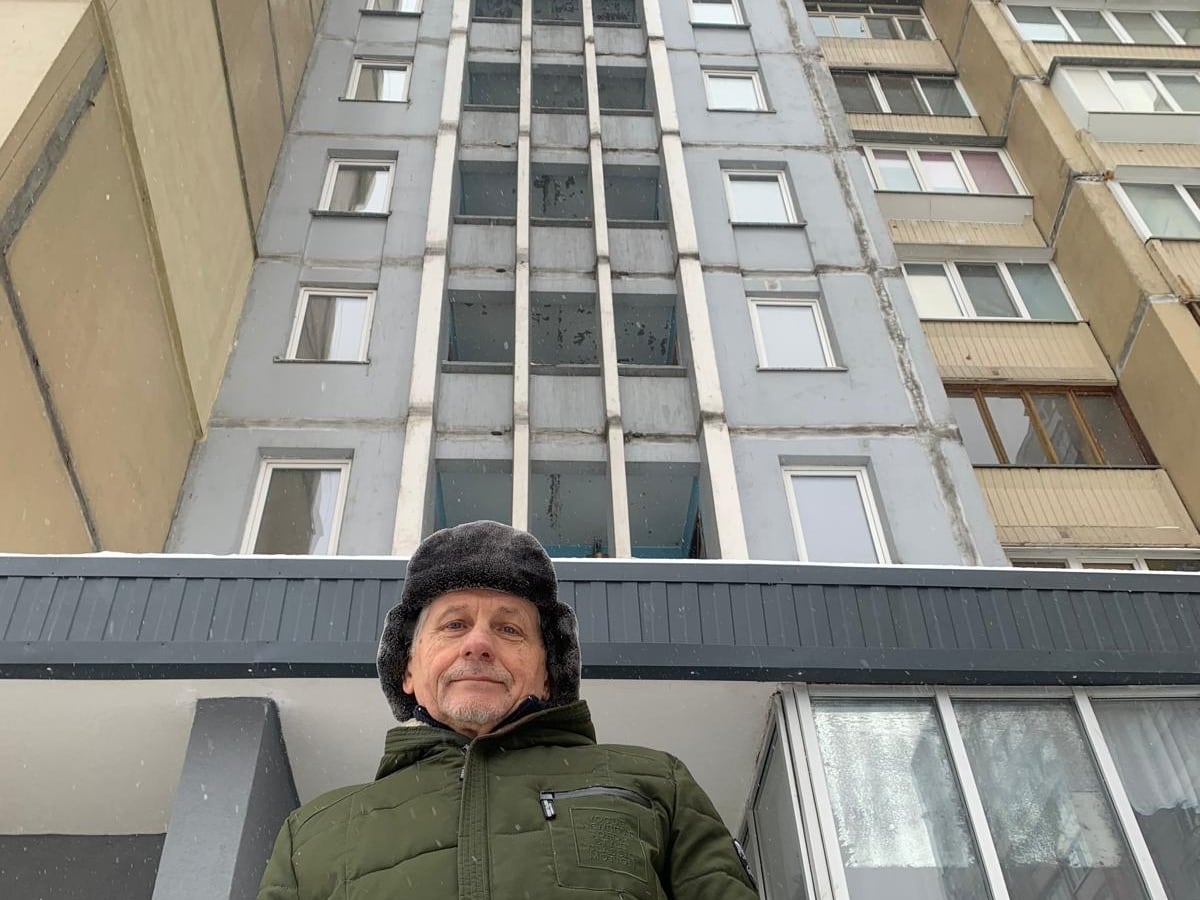
"Viktor Nevunniy, 70, returns home after doing some shopping. He has a fever of 39 degrees Celsius and heads straight for the elevator. It's not working; there's a power outage. He lives on the 16th floor, the top floor of a building on Valtynska Street in Kyiv. He has to wait and takes shelter in the lobby, where Arkadi, the concierge, is having lunch sardines and bread next to a couple of radiators connected to a generator."
"Outside it's minus seven degrees Celsius and snow is falling. A welcome relief compared to the -20C of the past few days, which have returned this week in the harshest winter of the four years of Russia's full-scale invasion of Ukraine. Moscow struck again early last Saturday at the battered infrastructure of DTEK, Ukraine's largest energy company, the 10th attack since October. There have been over 220 strikes on its facilities since the start of the war in February 2022."
Viktor Nevunniy, 70, returns home with a 39°C fever and encounters a powerless elevator during a power outage. He waits in the lobby beside Arkadi, the concierge, who eats sardines and bread next to radiators connected to a generator. Outside temperatures are around -7°C after a recent -20°C cold spell. Moscow struck DTEK's infrastructure in a recent attack, the 10th since October, part of over 220 strikes on DTEK facilities since February 2022. Kyiv residents now receive about 1.5 to 2 hours of electricity daily. The Darnytsia thermal plant was destroyed, leaving more than 1,400 apartment buildings without heating and many blocks without hot water for two months.
Read at english.elpais.com
Unable to calculate read time
Collection
[
|
...
]