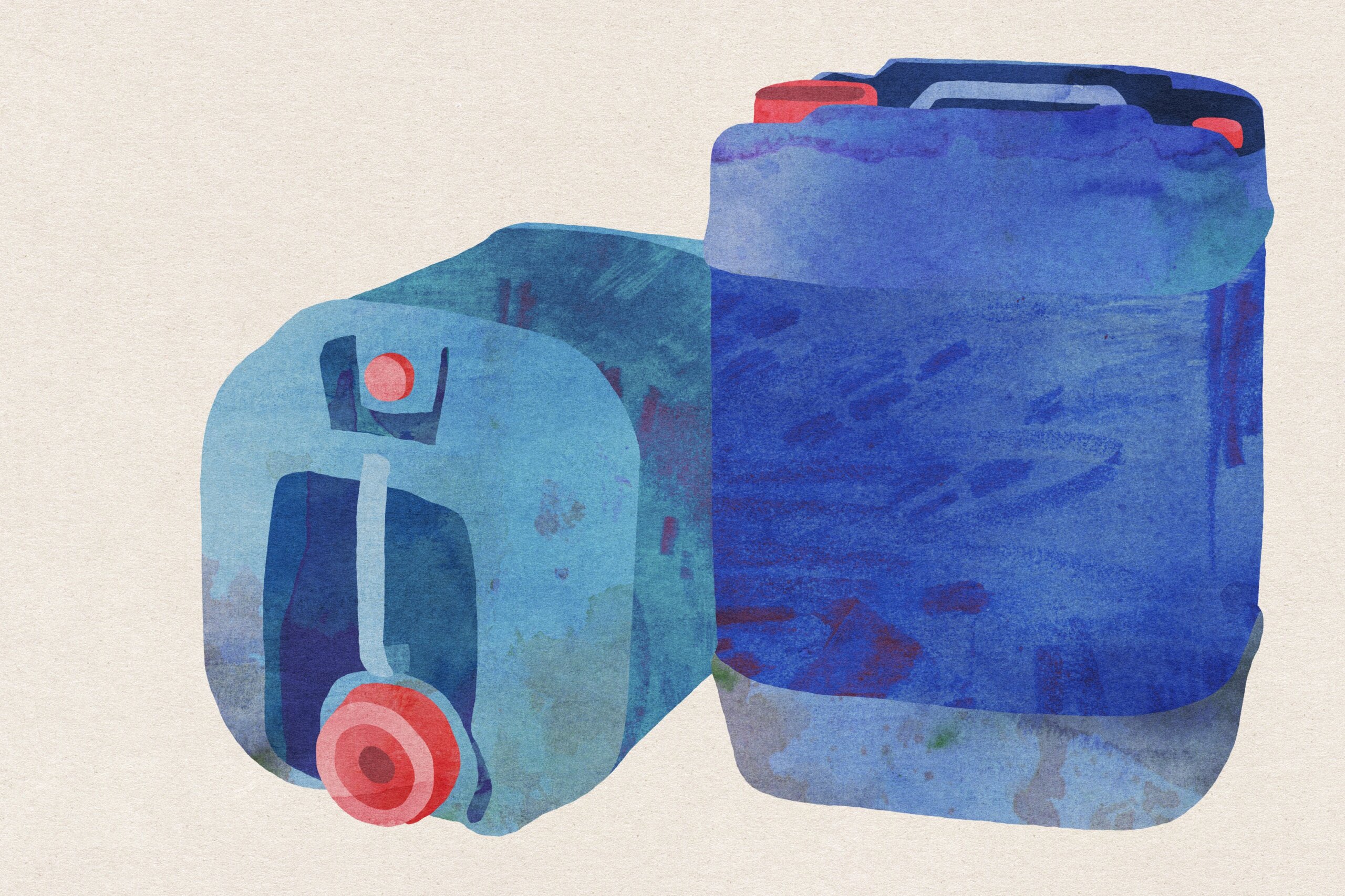
"I open the faucet and water gushes out, frothing as it fills a bright blue twenty-litre plastic jug, its faded sticker declaring BUILT TOUGH. You've probably seen one in the outdoors aisle at Canadian Tire: a cubic jug with a red or white screw-top faucet and a built-in handle for convenience. Most Canadians would associate the blue jug with camping trips."
"I'm lugging six twenty-litre blue jugs in the back of my truck to my permanent residence outside of Whitehorse, a dwelling without running water known as a "dry cabin." These 120 litres will last myself and my partner-and our three dogs-just over a week. On average, individual Canadians use 223 litres of water a day. For us, it rounds down to just under nine."
"In the Yukon, a territory of 47,170 people, we belong to a fringe demographic for whom the blue jug isn't recreational but an essential vessel. It's difficult to say how many of us exist. Some dry cabins have formal rental agreements. Many, ourselves included, don't count on paper but, instead, rely on handshake deals. While modern life is built for convenience, and artificial intelligence works to erode away human labour, the blue jug stands in stark opposition. A tool of utilitarian labour, of measuring out a vital resource and valuing every last drop, the blue jug means something to Yukoners. It's described with love and resentment, it shows up in art, it's stitched onto wedding quilts."
A resident of a dry cabin outside Whitehorse transports six 20‑litre blue jugs, providing 120 litres of water for two people and three dogs for just over a week. That household uses under nine litres per person per day, compared with the Canadian average of 223 litres. Blue jugs are common camping gear repurposed as essential water containers for drinking, washing and rationing. Many dry cabins lack formal records and depend on informal arrangements for access. Blue-jug culture combines affection and resentment, appears in local art and textiles, and shapes social rituals of mutual aid.
Read at The Walrus
Unable to calculate read time
Collection
[
|
...
]