"Olena, 39, spoke daily with her husband, an officer in the Ukrainian army deployed on one of the fronts in the eastern Donetsk region. So, when she lost contact with Maksim, 33, on September 24, she was on high alert. The next day, she started pulling strings and soon received a response from his superiors. In any case, she calmly explains that she even typed, Google, how long can a husband remain missing?"
"Olena stayed informed the whole time, but she didn't know that the five most harrowing weeks of her life lay ahead of her, despite the fact that the army withheld a significant part of what had happened. She's grateful for that. Maksim not only starred in one of the most incredible rescues of the war, but his evacuation, completed on October 27, demonstrates that it's not just aerial and maritime drones that are shaping the course of the conflict."
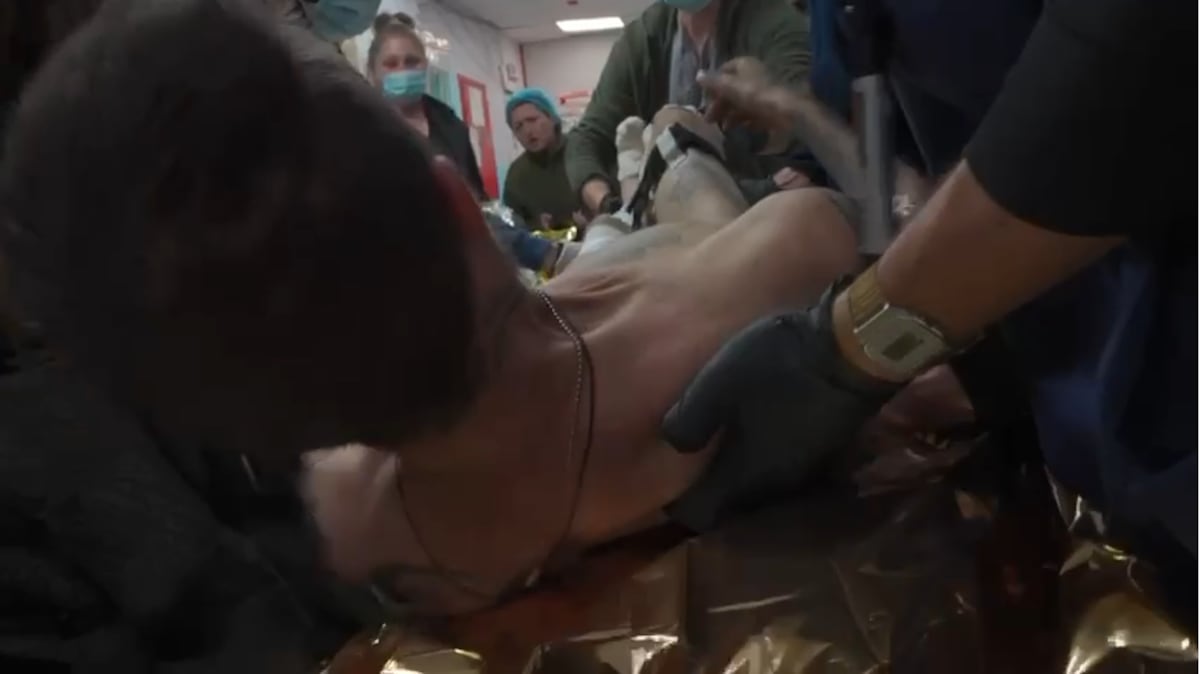
"Land drones are also playing a crucial role, like the one used by his comrades to save the life of this soldier, who was seriously wounded the day he lost contact with his wife. The vehicle, equipped with a kind of metal sarcophagus to protect the body, managed to survive a mine explosion and a drone attack. Olena and Maksim (who prefer not to use their surnames), now together, receive EL PAIS in a hospital room in Kyiv."
Olena lost contact with her husband Maksim, an army officer deployed in Donetsk, after he stepped on a small camouflaged mine on September 24. Maksim’s right leg was badly injured and later amputated; he was wounded again in the arm by a subsequent explosive. He spent weeks in enemy-controlled, drone-monitored territory while comrades sheltered and tried to evacuate him. On October 27 a land drone with a metal sarcophagus was used to extract and protect his body amid mine explosions and drone attacks, enabling his rescue and evacuation. Olena and Maksim are now together in a Kyiv hospital.
Read at english.elpais.com
Unable to calculate read time
Collection
[
|
...
]