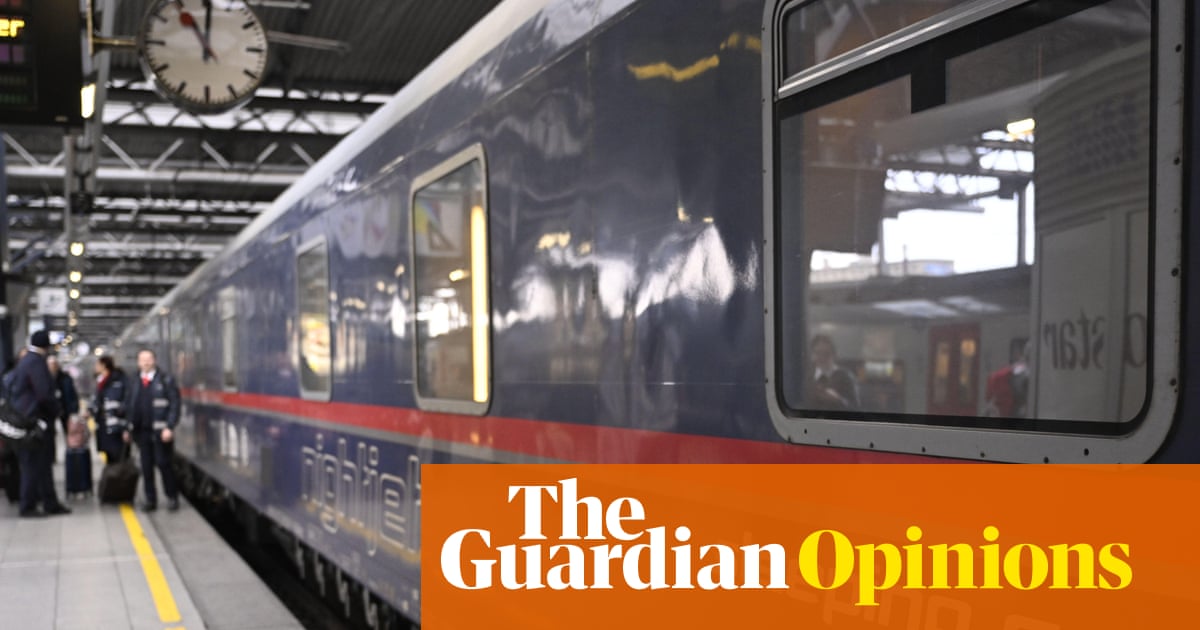
"The golden era of night trains had, it was previously assumed, gone for good amid the rise of low-cost, short-haul flights. But the new environmental imperatives suggested that they could be a glamorous part of a greener future, delivering a climate impact that was 28 times less than flying. The European Commission enthusiastically identified a plethora of potential new routes that it judged could be economically viable."
"Sadly, due to a series of challenges that Brussels and national governments have done too little to address, the renaissance appears to be stalling. Last month, a two-year-old night service linking Paris with Vienna and Berlin was scrapped after state subsidies were removed. The French operator, SNCF, has claimed that without financial assistance, the particular costs associated with running a night train are simply too high."
"Demand is not the problem. The Paris-Vienna route boasted an occupancy rate of 70%, and the evidence consistently shows that the European public would back an expanded, affordable and modernised network. One YouGov survey found that in Germany, Poland, France, Spain and the Netherlands, 69% were willing to take night trains, while almost three-quarters of respondents believed rail travel should be cheaper than flying on equivalent routes."
The EU's net-zero commitment revived hopes for night trains as a low-carbon alternative to short-haul flights, offering dramatically lower climate impact. The European Commission identified many potentially viable routes, but progress has stalled amid funding withdrawals and operational challenges. Recent examples include the scrapping of a Paris–Vienna–Berlin service and the derailment of a Basel–Copenhagen–Malmö launch after state subsidies were removed. Ridership and public support are strong, with high occupancy rates and survey backing. Major barriers include expensive night-train operating costs, VAT and track-access disparities versus aviation, and a shortage of rolling stock. Targeted funding, regulatory reform, and investment are needed to expand services.
Read at www.theguardian.com
Unable to calculate read time
Collection
[
|
...
]