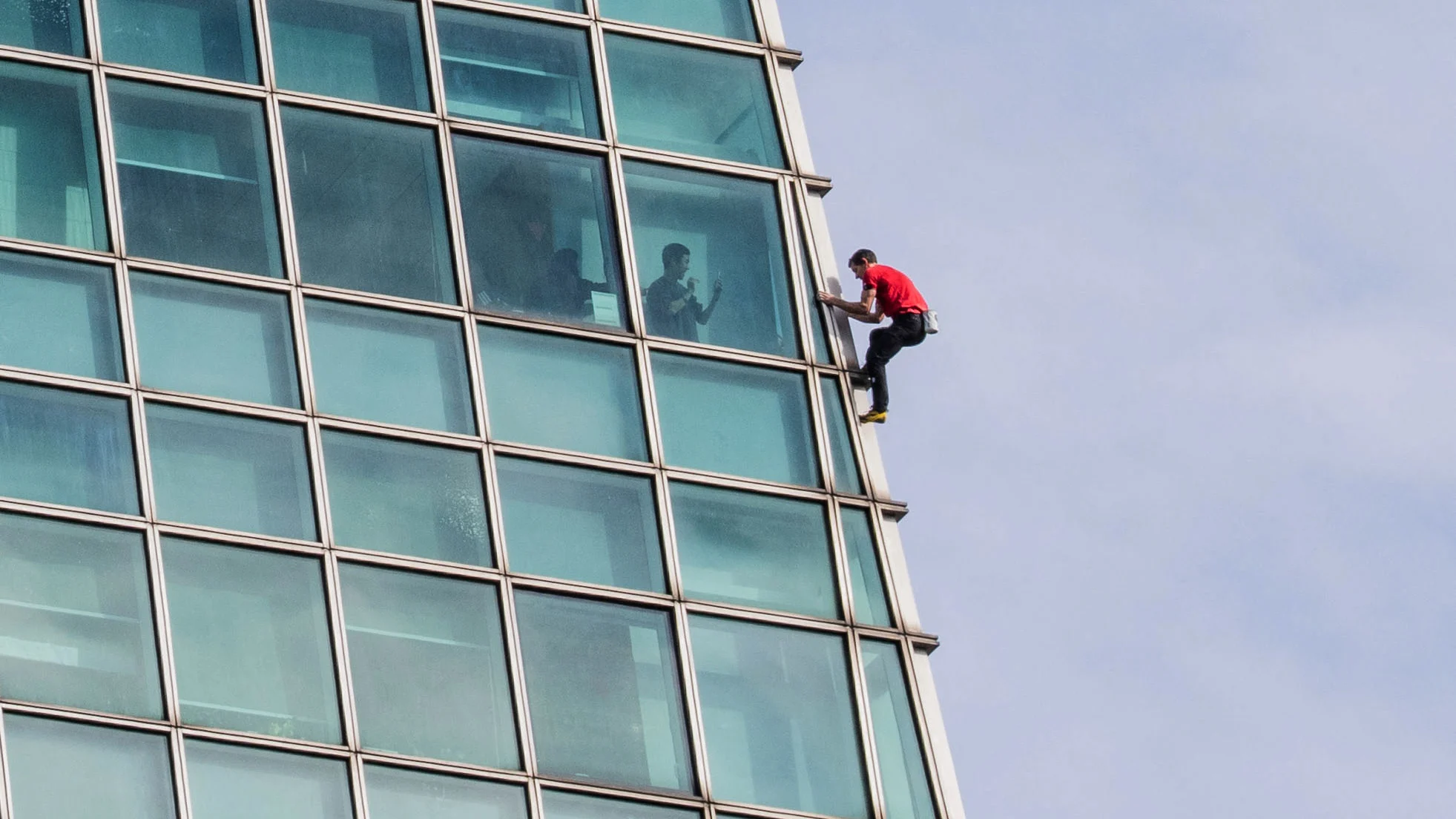
"Last Saturday, more than six million people held their breath as Alex Honnold took his first step up Taipei 101. The Free Solo climber, who went on to ascend Taiwan's tallest building without the safety of a rope and harness, drew crowds all around the building, as well as on Netflix, where the ascent was live-streamed as part of a show called Skyscraper Live."
"Modern rock climbing took shape in the late 19th century, when alpinists ventured beyond traditional mountaineering and onto steeper, more technical cliffs. By the mid-20th century, climbers embraced "free climbing," meaning they relied on their hands and feet to move upward while using ropes only as a safety backup in case of a fall. Then, in the '70s and '80s, free-soloists like John Bachar pushed the sport to its extreme, stripping away the rope entirely and turning every move into a high-stakes commitment."
Alex Honnold climbed Taipei 101 without ropes or harness, and the ascent was live-streamed to millions. Buildering, derived from bouldering, means climbing man-made structures and has existed for over a century. Modern rock climbing emerged in the late 19th century as alpinists addressed steeper cliffs. By mid-20th century climbers practiced free climbing, using ropes only as backups. In the 1970s and 1980s free-soloists eliminated ropes entirely, increasing risk. Dan Goodwin, who has scaled multiple skyscrapers, regards buildings as a new challenge. Urbanization and gym-based training push climbers to seek high rises, but building surfaces and repetitive features change the nature of movement.
Read at Fast Company
Unable to calculate read time
Collection
[
|
...
]