"In the winter of 1993, during the siege of Sarajevo, people burned books and furniture to keep warm. Water froze in pipes. Electricity vanished for the duration of the war. Children slept in coats and hats, their breath visible in dark rooms. Cold itself became a weapon of war. I remember, when I was reporting from the Bosnian capital, seeing doctors operating by candlelight or wearing camping headlamps."
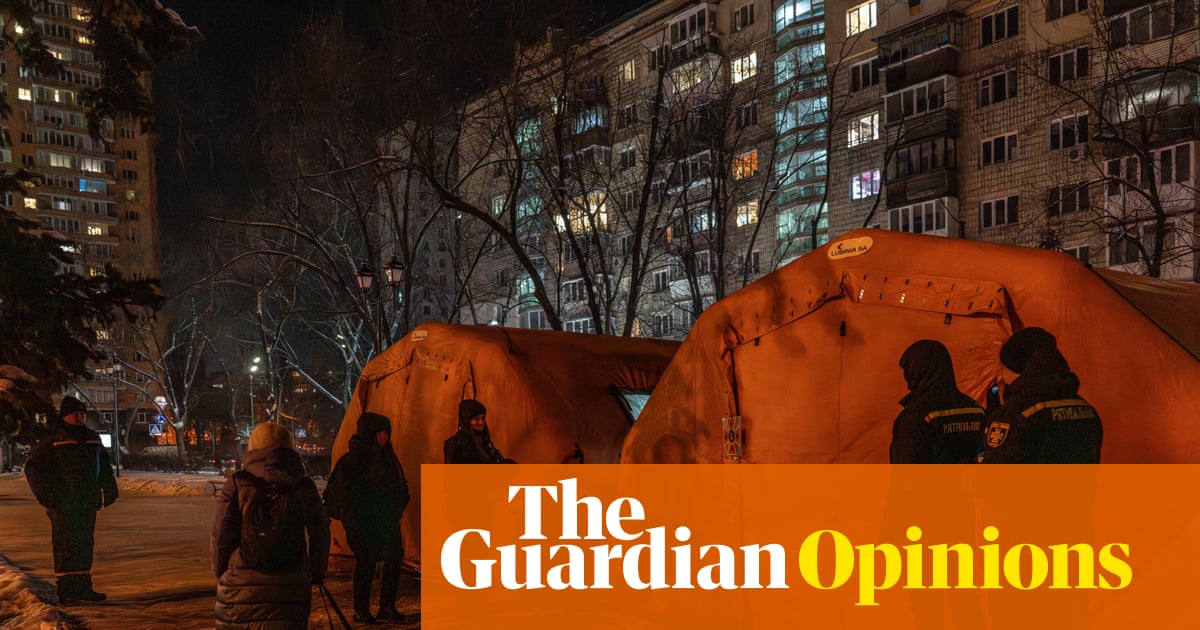
"Three decades later, I am watching another winter war this time in Ukraine. It is a human-made catastrophe. Russia is now systematically targeting the country's energy infrastructure. Since last mid-autumn, attacks on power and heating systems across eastern, central and southern Ukraine including Kyiv, Odesa and Kharkiv have forced daily electricity outages. Until December, power cuts followed a grim rhythm: four hours on, four hours off, all day and night. Twelve hours of light and warmth, 12 hours of darkness and cold."
During the 1993 siege of Sarajevo, residents burned books and furniture to stay warm, water froze in pipes, and electricity disappeared for the war's duration. Children slept in coats with visible breath, doctors operated by candlelight or headlamps, and elderly people chopped the last trees for fuel. Frozen ground prevented burials, turning a football pitch into a cemetery. Three decades later, Russia is systematically targeting Ukraine's energy infrastructure, causing daily outages, cyclic power cuts, and widespread cold. Damage is estimated at $1bn over three months, with January 2026 strikes leaving thousands of Kyiv buildings repeatedly without heating.
Read at www.theguardian.com
Unable to calculate read time
Collection
[
|
...
]