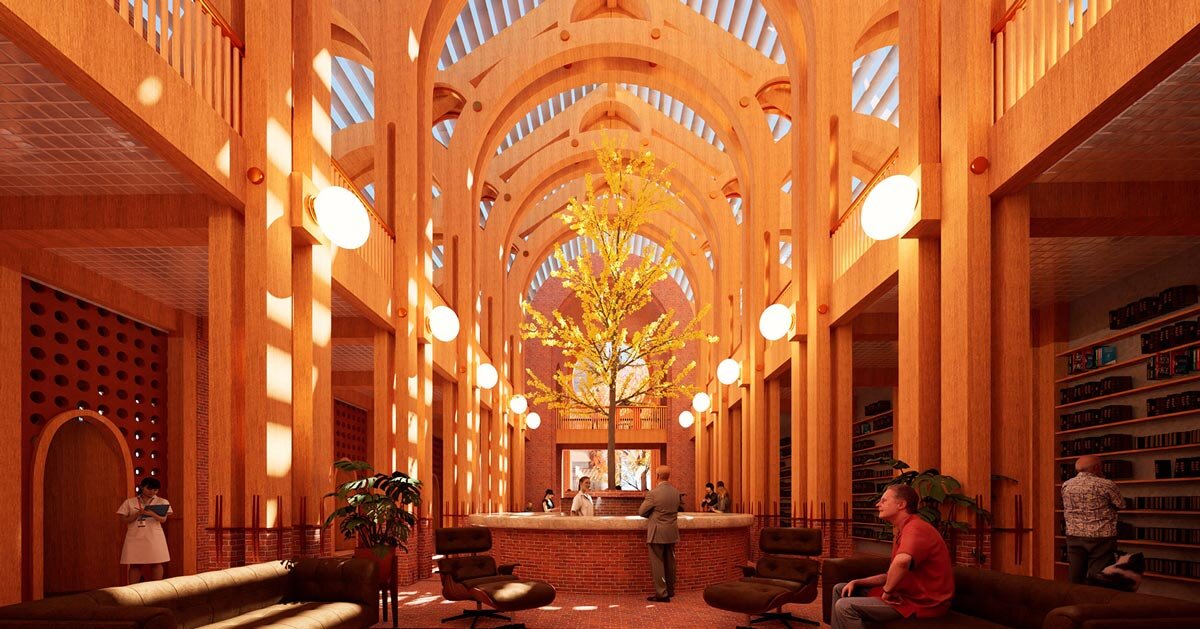
"The project explores how architecture can structure the experience of time for hospice patients, whose daily lives are shaped by heightened awareness of its limits. Through material selection, spatial sequencing, and environmental integration, the building emphasizes gradual change across days, seasons, and longer cycles of aging and weathering."
"The design responds to critiques of contemporary medical environments that prioritize efficiency and constant activity. In contrast, the House of Timefulness introduces spaces organized around slower rhythms and sensory variation. Internal planting areas in the atrium, chapel, and garden courts emphasize seasonal change through foliage and growth cycles."
"Material selection plays a central role in the architectural concept. Rather than relying on painted finishes, the building is composed of materials intended to age visibly over time. Soft, salvaged plaster, sun-baked, oxidizing brass, terracotta breeze blocks, and planted ivy were chosen for their capacity to weather and develop patina."
The House of Timefulness is a daytime hospice center in Cambridge designed by StudioLowe Design to address how architecture shapes temporal experience for patients acutely aware of time's limits. The building prioritizes slower rhythms and sensory variation over medical efficiency through internal planting areas, seasonal foliage cycles, and layered natural light creating shifting patterns. Materials including salvaged plaster, oxidizing brass, terracotta blocks, and planted ivy are selected specifically for their visible aging and patina development. Water features and suspended gardens reinforce the focus on gradual transformation. The design integrates the hospice within its urban community context, responding to research showing patients value both proximity to nature and familiarity with their architectural and social surroundings.
Read at designboom | architecture & design magazine
Unable to calculate read time
Collection
[
|
...
]