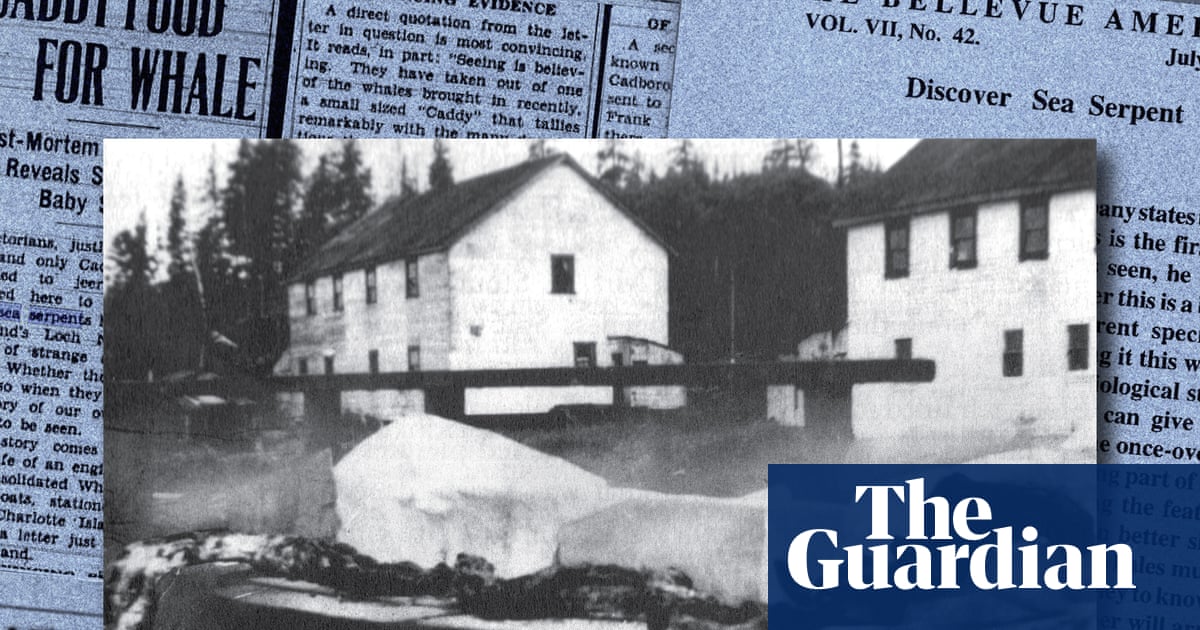
"Crews at the whaling station in the archipelago of Haida Gwaii assembled a platform of wooden boxes and laid out the 3-metre (10ft) carcass, using a white sheet to display the curiosity that had baffled veteran whalers. A photo of the creature, called the Cadborosaurus, by locals, appeared on the front page of a local newspaper on 31 October 1937, adding to the growing lore that a marine cryptid stalked the waters."
"John Kirk, president of the British Columbia Scientific Cryptozoology Club, is adamant the carcass was of an unknown species hiding at the edge of human understanding in the emerald depths of the Salish Sea. The scientific world, of which we are a part, is always looking for excuses not to allow new animals into the catalogue."
"One of the few pieces of the carcass sent for identification was shipped to a museum in Victoria, 400 nautical miles (740km) south-east of Haida Gwaii. It was disposed of after the museum's director – not a trained zoologist – suggested it was from a foetal baleen whale. We lost a massive discovery here because of misidentification."
In 1937, whalers at Haida Gwaii discovered a three-meter carcass with dog-like head, camel nose, reptilian body, and horse tail inside a sperm whale. The creature, dubbed Cadborosaurus, was photographed and displayed publicly, generating local legend about a marine cryptid inhabiting the Salish Sea. A sample sent to a Victoria museum was identified as a foetal baleen whale by a non-zoologist director and subsequently discarded. Cryptozoology advocates argue this represents a lost opportunity to document an unknown species, while the scientific community remains skeptical of the claim.
Read at www.theguardian.com
Unable to calculate read time
Collection
[
|
...
]