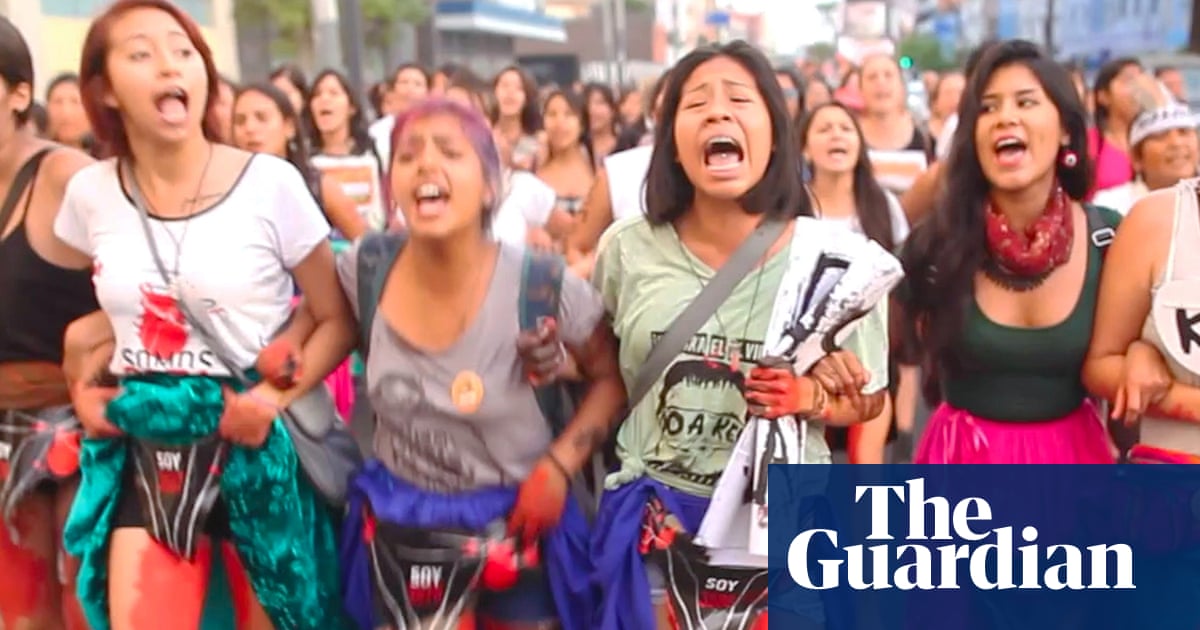
"The court held the Peruvian state internationally responsible for the violation of Ramos's right to life, health, personal integrity, family, access to information and equality before the law. The court determined that Ramos was pressured by health personnel to undergo a tubal ligation on 3 July 1997, in a makeshift facility that did not have the necessary equipment or medications for proper risk assessment or to deal with emergencies."
"The mass sterilisation of hundreds of thousands of women in the 1990s is regarded as Peru's most flagrant violation of human rights under the late former president Alberto Fujimori. Neither Fujimori nor his health ministers were ever prosecuted for the campaign, which, according to the court, resulted in more than 314,000 sterilisations of women and 24,000 of men, many under coercion and without valid consent, mainly affecting Indigenous women and those living in poverty or extreme poverty."
"The Peruvian state was found responsible for the lack of due diligence and unjustified delay in investigating what happened and for the impact Ramos's death had on her daughters, husband and mother. As a result, the state had violated the rights to personal integrity [and] family, and the rights of children."
The inter-American court of human rights issued a landmark ruling holding Peru internationally responsible for Celia Ramos's death in 1997 following a coerced tubal ligation procedure. Ramos, a 34-year-old mother of three, suffered a severe allergic reaction during surgery performed in inadequate facilities without proper equipment or emergency protocols, dying 19 days later. The court found Peru violated her rights to life, health, personal integrity, family, information access, and equality before the law. The state was also held responsible for inadequate investigation and the impact on her family. This ruling addresses Peru's forced sterilization program, which operated from 1996 to 2000 and affected over 314,000 women and 24,000 men, predominantly Indigenous and impoverished populations. No government officials, including former president Alberto Fujimori, were prosecuted for this human rights violation.
#forced-sterilization #human-rights-violations #peru #indigenous-women #inter-american-court-of-human-rights
Read at www.theguardian.com
Unable to calculate read time
Collection
[
|
...
]