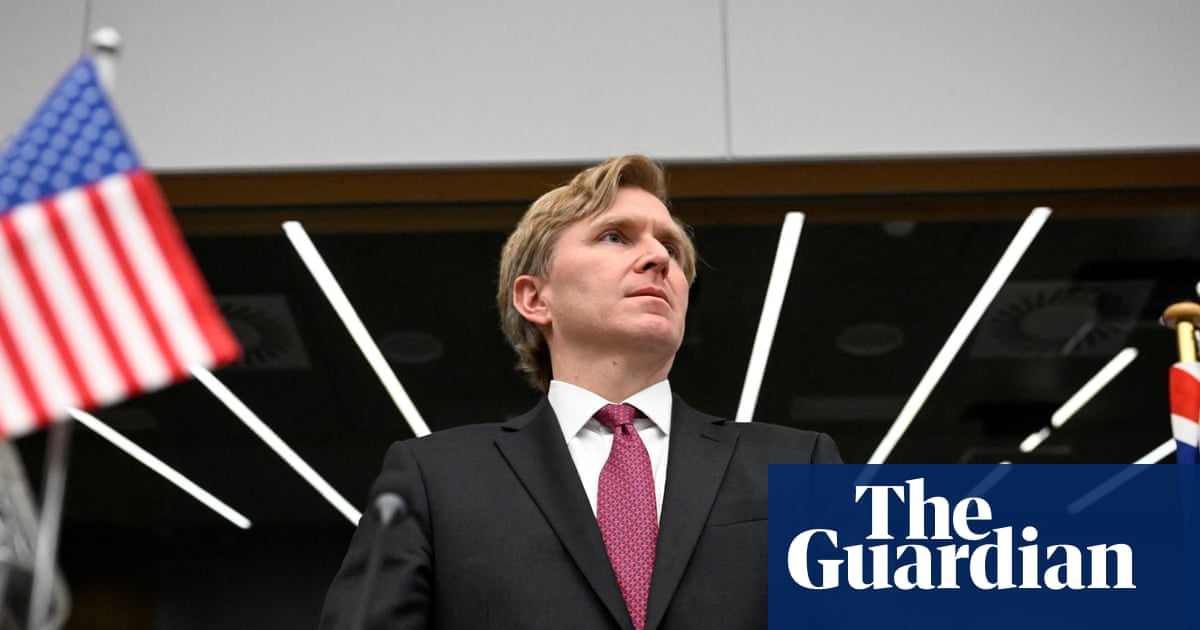
"The Pentagon's policy chief, Elbridge Colby, has told European Nato defence ministers in Brussels that they need to step up their combat capabilities and take the lead in protecting their continent from the Russian threat. The influential undersecretary for war, sent by the White House in place of his boss, Pete Hegseth, said the US would reduce conventional forces in Europe but insisted Washington remained committed to the military alliance."
"Europe, Colby said, had to go beyond inputs and intentions toward outputs and capabilities as he sought to reset relations after last month's damaging row over Greenland, which Donald Trump had demanded from Denmark. It means prioritising war-fighting effectiveness over bureaucratic and regulatory stasis. It means making hard choices about force structure, readiness, stockpiles and industrial capacity that reflect the realities of modern conflict rather than peacetime politics, Colby told Nato allies on Thursday."
"Though he emphasised that the US would continue to provide an extended nuclear deterrent, he said Washington's forces currently numbering about 85,000 in Europe would be deployed in a more limited and focused fashion. The undersecretary is one of the most vocal proponents in the Trump administration of shifting US military attention away from Europe. The most consequential interests for the US were in deterring China, and in the Americas, he said, while Europe would have to take the lead for its conventional defence."
European NATO members must increase combat capabilities and assume primary responsibility for conventional defence against the Russian threat. The United States will reduce the footprint of its conventional forces in Europe and deploy its roughly 85,000 troops in a more limited, focused manner while continuing to provide an extended nuclear deterrent. Prioritising warfighting effectiveness requires hard choices on force structure, readiness, stockpiles, and industrial capacity that reflect modern conflict realities rather than peacetime politics. NATO European members have agreed to raise core defence spending to 3.5% of GDP by 2035, though practical implications remain unclear.
Read at www.theguardian.com
Unable to calculate read time
Collection
[
|
...
]