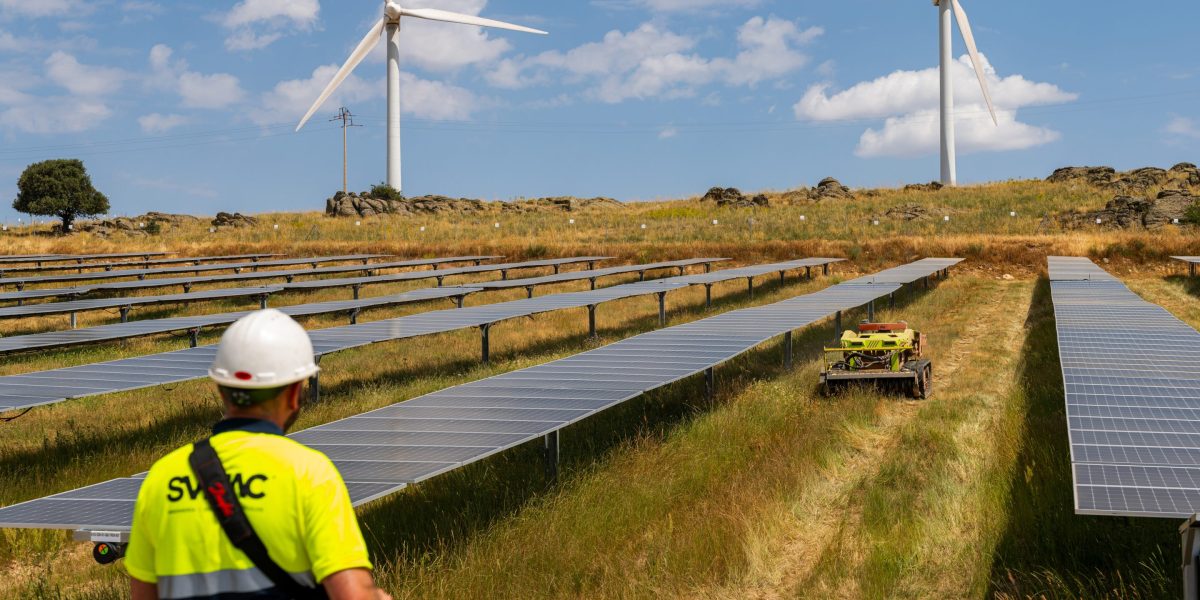
Renewable electricity capacity in Europe has grown faster than demand, producing frequent wholesale price falls below zero during sunny or windy surges when storage remains limited. Spain's solar capacity rose from nearly 9 GW in early 2020 to 32 GW by early 2025, aided by subsidies. By September, Spain recorded over 500 hours of negative wholesale prices, France over 400 hours, and Germany trended similarly. Negative wholesale prices force traders to pay for surplus power and can affect consumers in markets with dynamic pricing. EU household electricity prices fell 1.5% year-over-year in the first half; excluding taxes, prices have declined since 2023 after prior spikes. U.S. electricity prices are rising amid growing demand from AI data centers, worsening affordability pressures.
"With solar panels and wind turbines installed in more places-while energy storage capacity is still lagging-an especially sunny and windy day can generate more electricity than is needed, sending prices below zero. By September, the number of hours in Spain with negative electricity prices had already topped 500 for the year to date, more than double the full-year total for 2024. Similarly, France's hours had topped 400 by then, also exceeding its 2024 tally, and Germany was on a trajectory to do so as well."
"That doesn't mean households are also paid to consume electricity, because those rates are often set in advance. But negative prices can eventually be felt in markets with more dynamic pricing regimes. In fact, electricity prices for households in the European Union during the first half of the year were down 1.5% from the first half of 2024, according to data published in October. Excluding taxes Europeans paid, electricity prices fell more sharply and have been sliding since 2023, after spiking in 2021 and 2022."
"Electricity supply is increasingly outpacing demand in Europe as renewable energy capacity grows, making negative prices a more frequent occurrence. In early 2020, Spain's installed solar power capacity totaled nearly 9 gigawatts, according to data from Red Eléctrica. In early 2025, it had soared to 32 GW, helped by subsidies. With solar panels and wind turbines installed in more places-while energy storage capacity is still lagging-an especially sunny and windy day can generate more electricity than is needed, sending prices below zero."
#renewable-energy-growth #negative-wholesale-electricity-prices #european-household-electricity-prices #us-electricity-cost-pressures
Read at Fortune
Unable to calculate read time
Collection
[
|
...
]