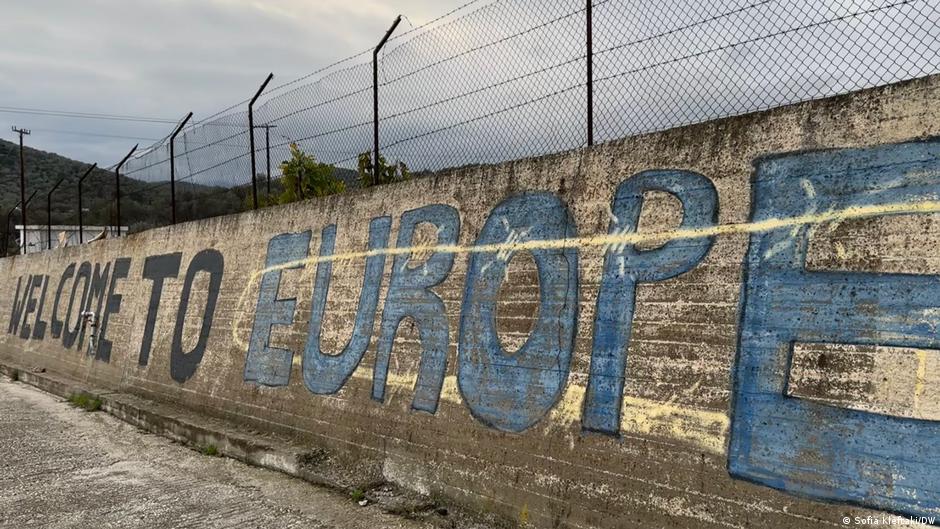
"Barbed wire still surrounds the place where the refugee camp of Moria once stood. At what used to be the entrance to the camp, excavators have started clearing the area. Although the site is no longer is use, evidence of what used to be the largest refugee camp in Europe is everywhere. Faded graffiti is still visible on the outer walls: "Graveyard," "#MeMoria," "Welcome to Europe""
"with two stars with sad faces drawn alongside. Scattered among the rubble and ash are burned shoes, signs in Arabic outlining measures to prevent the spread of COVID-19, bandages and scorched medical supplies. The Moria refugee camp was engulfed in flames on the evening of September 8, 2020Image: Angelos Tzortzinis/dpa/AFP via Unicef Deutschland/picture alliance In the middle of all this, one tree stands out: Green and undamaged, it rises from the scene of destruction around it like a beacon of resilience."
Barbed wire and excavators mark the former entrance to Moria, while remnants of the camp remain: faded graffiti reading "Graveyard," "#MeMoria," and "Welcome to Europe," burned shoes, scorched medical supplies, and COVID-19 signage in Arabic. A single green tree stands amid ash and rubble. The camp was built in 2013 and expanded during the 2015 refugee surge, becoming Europe’s largest facility despite a design capacity below 3,000. Overcrowding and harsh conditions drew widespread criticism. The camp was engulfed in flames on September 8, 2020, and legal cases such as the Mardini trial continue to link past events to the island’s present.
Read at www.dw.com
Unable to calculate read time
Collection
[
|
...
]