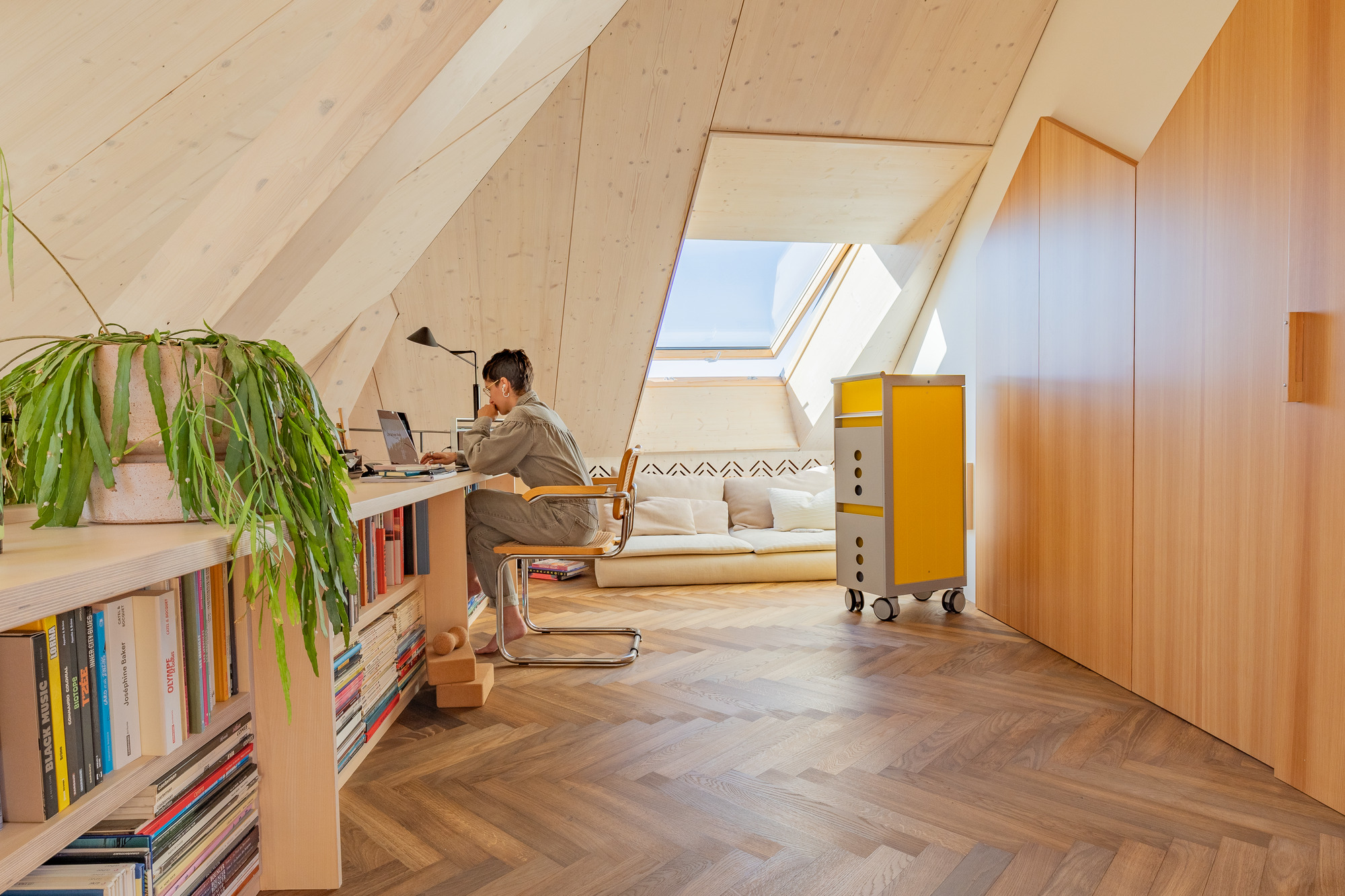
"From Alpine chalets shedding snow to Mediterranean roof tiles mitigating summer heat, the slope responded to climate and construction challenges long before it became an aesthetic code. Although modern architecture has favored horizontal planes and orthogonal plans, the pitched roof requires a project to be conceived in section."
"Unlike vertical windows, which capture lateral light, roof apertures receive a larger portion of the visible sky and significantly higher luminance than the horizon, offering up to three times more light than vertical glazing on overcast days. Top lighting tends to penetrate more deeply into the floor plan and to distribute more evenly, reducing contrast and dependence on artificial lighting."
"The European standard EN 17037 reinforces this approach by establishing verifiable criteria for daylighting, considering four dimensions: the amount of light indoors, quality of view, access to direct sunlight, and prevention of glare."
The pitched roof represents a universally recognized architectural form that originated from practical responses to climate and construction challenges rather than aesthetic preference. Beyond its symbolic function as shelter, the pitched roof requires sectional design thinking that creates spatial variations and efficient volume utilization. When integrated with roof apertures, this design strategy significantly enhances daylighting performance. Top lighting penetrates deeper into floor plans and distributes light more evenly than vertical windows, reducing artificial lighting dependency and contrast. The Daylight Factor measurement confirms superior interior illuminance from roof openings. European standard EN 17037 establishes verifiable daylighting criteria across four dimensions: indoor light quantity, view quality, direct sunlight access, and glare prevention.
#pitched-roof-design #daylighting-performance #roof-apertures #architectural-semiotics #building-standards
Read at ArchDaily
Unable to calculate read time
Collection
[
|
...
]