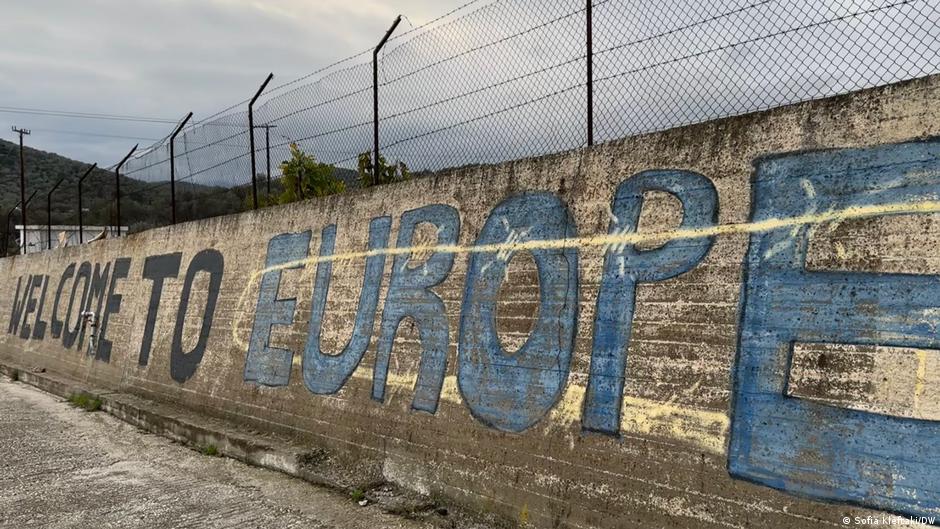
"Barbed wire still surrounds the place where the former refugee camp of Moria once stood. At what used to be the entrance to the camp, excavators have started clearing the area. Although the site is no longer is use, evidence of what used to be the largest refugee camp in Europe is everywhere. Faded graffiti is still visible on the outer walls: "Graveyard," "#MeMoria," "Welcome to Europe" with two stars with sad faces drawn alongside."
"In the middle of all this, one tree stands out: Green and undamaged, it rises from the scene of destruction around it like a beacon of resilience. The trial is a reminder of how closely Moria's past is still linked to the island's present. Situated just outside the town of Mytilene, the capital of Lesbos, the Moria camp was built in 2013 and became Europe's largest refugee facility before it was destroyed by fire in September 2020."
Moria refugee camp on Lesbos was built in 2013 and became Europe's largest refugee facility before being destroyed by fire on the evening of September 8, 2020. The site remains cordoned by barbed wire while excavators clear the entrance and evidence of the camp persists: faded graffiti, burned shoes, Arabic COVID-19 notices, bandages and scorched medical supplies. The camp was designed for fewer than 3,000 people but became dangerously overcrowded during the 2015 refugee influx from Afghanistan, Iraq and Syria. A trial of 24 aid workers, known as the Mardini trial, underscores ongoing legal and humanitarian consequences for the island.
Read at www.dw.com
Unable to calculate read time
Collection
[
|
...
]