"ENIAC (Electronic Numerical Integrator and Computer) was the first general-purpose, programmable electronic computer. Conceived during the Second World War, construction began in 1944 and finished in 1945. Weighing 30 short tons (about 27 metric tons), it was formally accepted by the US Army Ordnance Corps - which had financed it - in 1946. While other computing devices existed, including Britain's Colossus, ENIAC's general-purpose design set it apart from specialized machines like code-breakers."
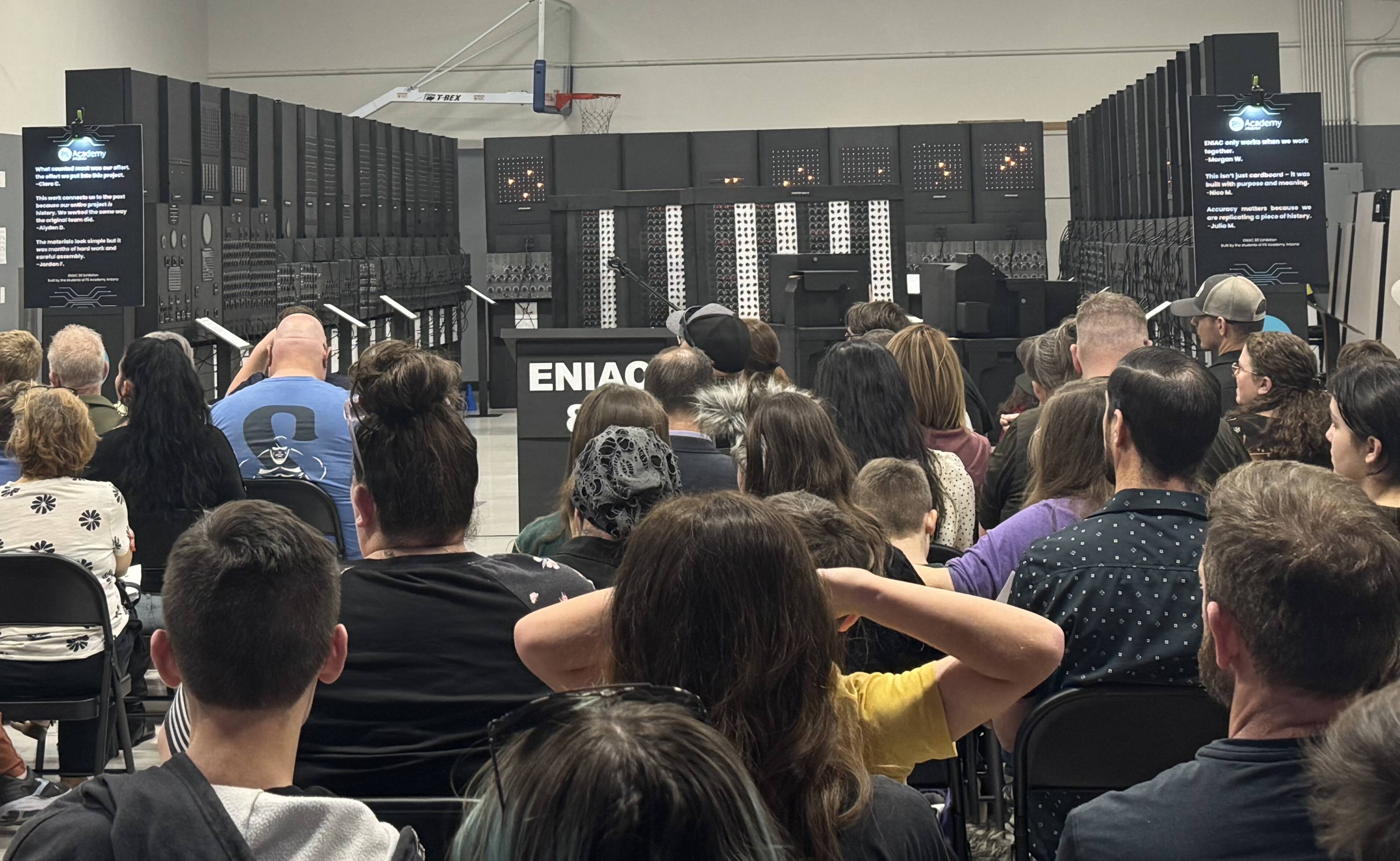
"The original is long gone, dismantled as obsolete and its components distributed to museums and universities. However, students at PS Academy Arizona have put together a 500-square-foot replica consisting of 45 individual units using original archival documents and historical references. The recreation is of ENIAC as it was first commissioned, marking the machine's 80th anniversary. Technology instructor Tom Burick calls it "a full-scale, historically accurate structural replica," though it is not functional."
"Assembling the almost 18,000 vacuum tubes needed by the real thing would be impractical. "All electronic components are visually simulated, not electrically active," he said. "Vacuum tubes were recreated using paper printed elements that match the size, spacing, and density of the originals... Cabling paths and plugboard interfaces were recreated visually and spatially so students could understand how dense, repetitive, and precise the machine was.""
ENIAC was the first general-purpose, programmable electronic computer, developed during World War II with construction from 1944 to 1945 and accepted by the US Army Ordnance Corps in 1946. The original machine weighed about 30 short tons and its general-purpose architecture distinguished it from specialized devices like Britain’s Colossus. The original ENIAC was dismantled and its components dispersed to museums and universities. Students at PS Academy Arizona built a 500-square-foot, 45-unit, visually accurate structural replica of ENIAC as first commissioned. Approximately 80 students worked six months on design and assembly, recreating vacuum-tube density and cabling visually while keeping the replica non-functional.
Read at Theregister
Unable to calculate read time
Collection
[
|
...
]