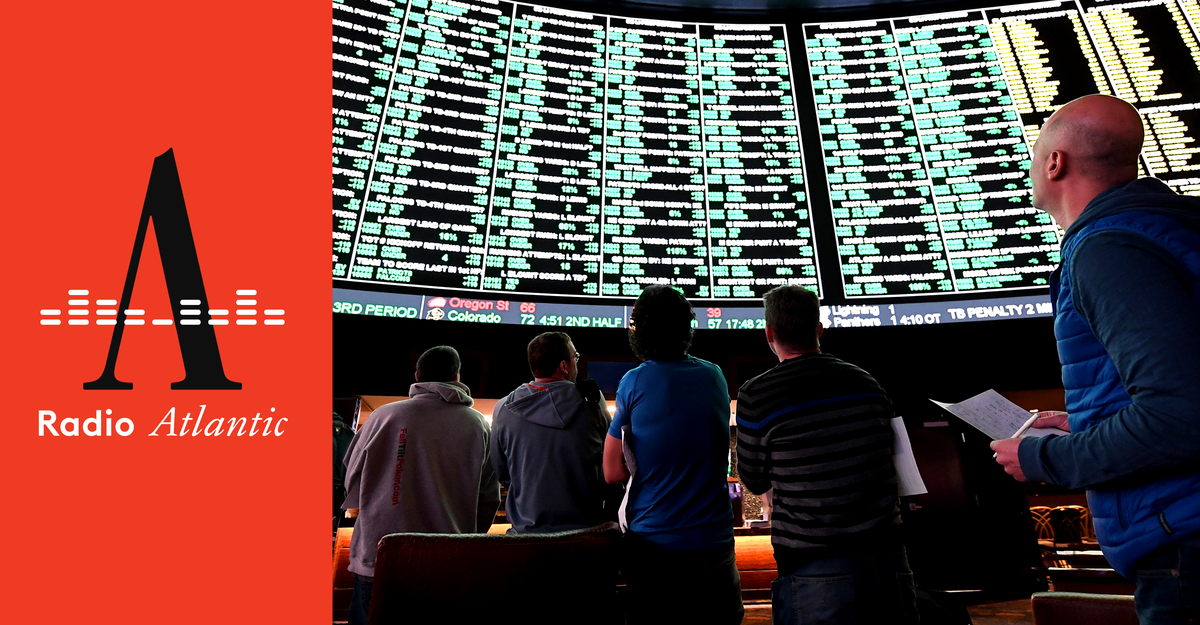
"From Plato to Charles Barkley, great minds have warned about the destructive power of gambling. The way societies have usually managed the vice is to cordon it off. It's legal, but contained to disreputable places, such as red-light districts, riverboats, and Nevada. This was true in much of the United States until 2018, when a Supreme Court ruling opened the door to legalized sports betting nationwide."
"If you've watched a game on TV in the past few years, or listened to a sports podcast, or checked a score on your phone, you have no doubt absorbed, via ads, this practically overnight cultural transformation: Sports betting is everywhere, and now accessible from your couch. Last year, Americans spent $160 billion on it."
"The easy availability means that people who otherwise might not have been tempted have gotten sucked in. Unlikely people-such as a Mormon father of four and Atlantic staff writer-are betting on sports these days. In the case of McKay Coppins, it was supposed to be just for research."
Following a 2018 Supreme Court ruling, sports betting shifted from restricted locations to nationwide legalization, becoming omnipresent through television, podcasts, and mobile apps. This rapid cultural transformation has made betting accessible to populations previously unlikely to participate, including conservative individuals. Atlantic staff writer McKay Coppins, a Mormon father of four, was given $10,000 to document a season of sports betting for research purposes. The experiment revealed personal vulnerabilities to temptation and the psychological mechanisms underlying gambling addiction. The proliferation of betting advertisements and easy digital access have fundamentally altered American entertainment consumption and created new pathways for problematic gambling behavior.
#sports-betting-legalization #gambling-addiction #marketing-and-advertising #personal-finance-risk #cultural-transformation
Read at The Atlantic
Unable to calculate read time
Collection
[
|
...
]