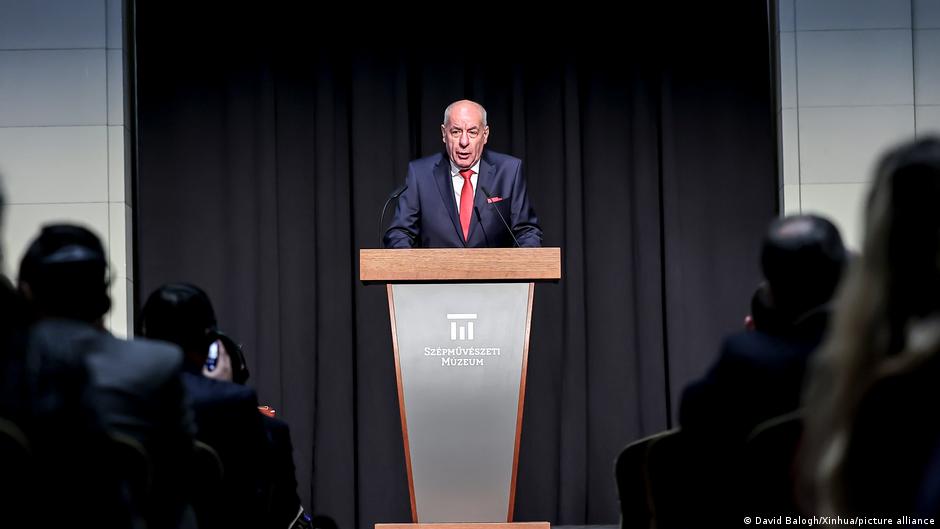
Hungary's parliament approved a constitutional amendment strengthening the president's position by changing the threshold for declaring the president unable to perform duties to a two-thirds majority. The bill passed 134-49 with two abstentions in a chamber dominated by Prime Minister Viktor Orban's Fidesz and allies. President Tamas Sulyok, viewed as an Orban ally, serves until 2030. The largely ceremonial presidency retains veto powers and can refer laws to the Constitutional Court, which is headed by Orban ally Peter Polt. Conservative opposition leader Peter Magyar and his TISZA party lead polls by about 10 points ahead of a likely April 2026 election.
"Hungary's parliament voted in favor of strengthening the president's position in future, a few months before parliamentary elections where longstanding Prime Minister Viktor Orban faces the biggest challenge to his stranglehold on national politics in years. Conservative opposition leader Peter Magyar and his TISZA party currently have a roughly 10-point lead in opinion polls, with a vote likely in April 2026. Hungary's parliament voted 134 in favor of the bill, with 49 votes against and two abstentions, meeting the two-thirds majority needed for the constitutional change."
"The role is a largely ceremonial one, not unlike Germany's presidency, with the real power held by the prime minister, who is head of government. However, the president does have the power to veto some legislation or refer it to the Constitutional Court for review, meaning the head of state does theoretically have the power to frustrate a government's agenda. Hungary's president, like Germany's, is more of a ceremonial and diplomatic figurehead than a political leader, but the role nevertheless imbues meaningful powersImage: Sebastian Gollnow/dpa/picture alliance"
Read at www.dw.com
Unable to calculate read time
Collection
[
|
...
]