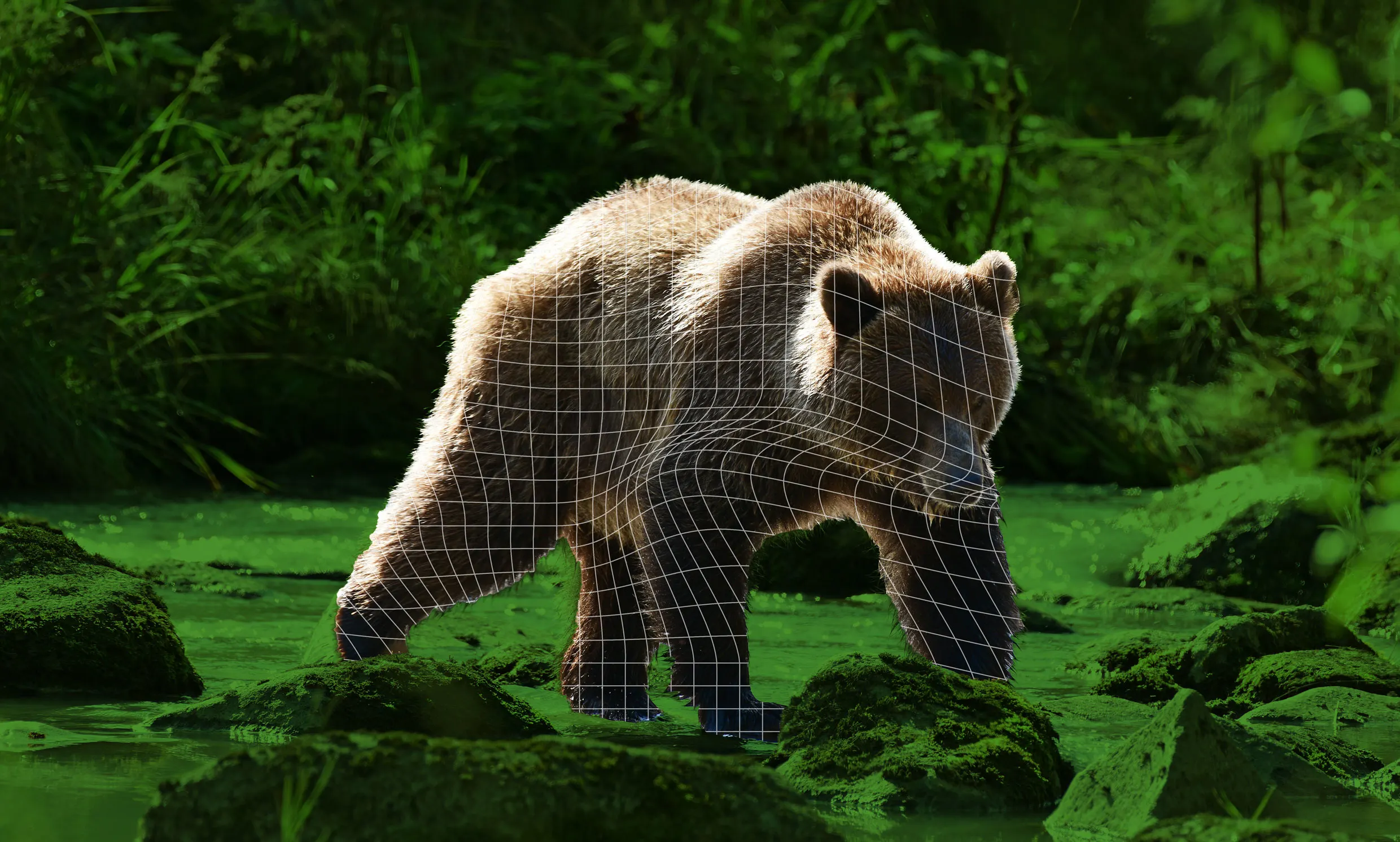
"Local authorities began trying to find the specific bear that was involved in order to relocate or euthanize it, depending on the results of their assessment. The attack, in Bella Coola, British Columbia, was very unusual bear behavior and sparked an effort to figure out exactly what had happened and why. That meant finding the bear involved-which, based on witness statements, was a mother grizzly with two cubs."
"Searchers combed the area on foot and by helicopter and trapped four bears. DNA comparisons to evidence from the attack cleared each of the trapped bears, and they were released back to the wild. After more than three weeks without finding the bear responsible for the attack, officials called off the search. The case highlights the difficulty of identifying individual bears, which becomes important when one is exhibiting unusual behavior."
"Recent advances in computer vision and other types of artificial intelligence offer a possible alternative: facial recognition for bears. As a cultural anthropologist, I study how scientists produce knowledge and technologies, and how new technology is transforming ecological science and conservation practices. Some of my research has looked at the work of computer scientists and ecologists making facial recognition for animals. These tools, which reflect both technological advances and broader popular interest in wildlife, can reshape how scientists and the general public"
A late-November 2025 grizzly attack in Bella Coola, British Columbia, injured 11 students, four seriously, and prompted efforts to locate the specific bear involved. Searchers trapped four bears, but DNA comparisons cleared them and they were released; the search was called off after more than three weeks without finding the responsible animal. Identifying individual bears is difficult because bears often look very similar and untrained observers struggle to tell them apart. DNA testing reliably distinguishes individuals but is costly and requires physical samples that can stress animals. Advances in computer vision and AI offer facial-recognition alternatives that could reduce trapping and alter conservation practices.
Read at Fast Company
Unable to calculate read time
Collection
[
|
...
]