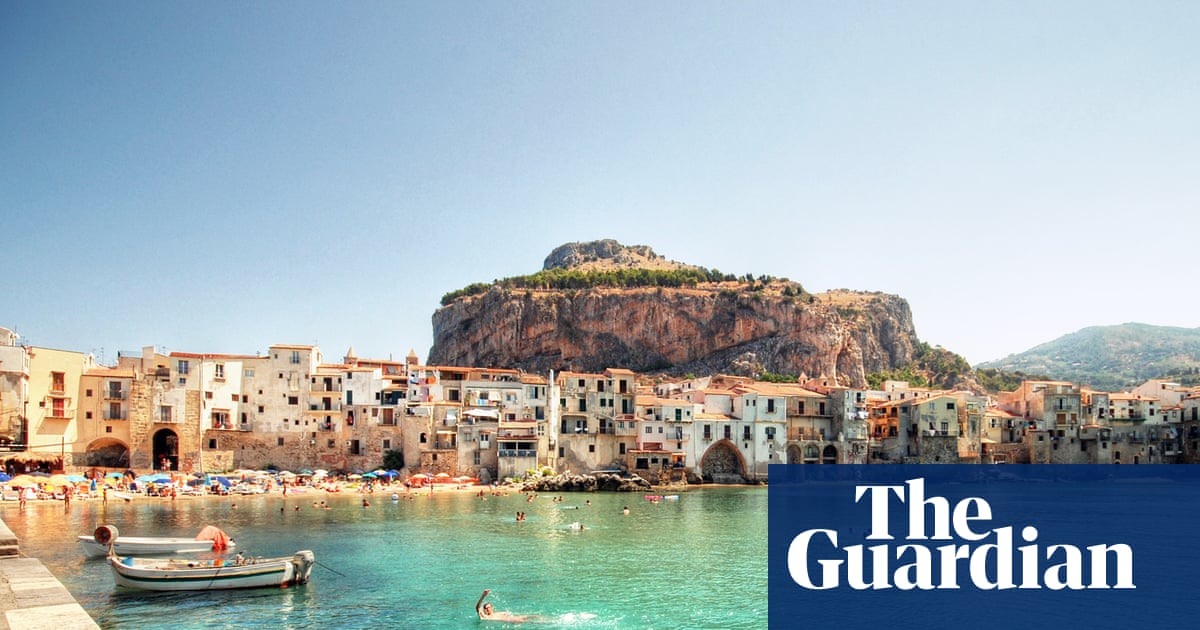
"Forty miles east of Palermo, the magnificent Sicilian resort town of Cefalu juts out beneath dramatic cliffs. The town has a perfect half-moon beach of golden sands melding into the gorgeous clear turquoise sea. Medieval lanes of stones in a diamond pattern lead up to a lively square offering great Italian food. It's fronted by a beautiful Norman cathedral with twin towers and Byzantine mosaics inside."
"From Faro, head east away from the more touristy haunts, and, between Olhao and Tavira, you'll find the charming fishing village of Fuseta. This whole stretch of coast is a natural park protected by sand spits and islands, which make for miles of calm lagoon waters. Take a water taxi to a range of completely deserted spots and get picked up at a prearranged time, or you can call when you're ready to return to civilisation."
"The mile-long Porto de Mos beach near Lagos in the western Algarve is true heaven. Watching the Atlantic rollers hitting the beach is awesome and mesmerising. After a dip or surf, a pint or two at Campimar beach shack is well earned. It's also a great restaurant in the evening for local seafood, wine, and enjoying views of scudding clouds and hypnotic waves. Philip Webster"
Cefalu sits forty miles east of Palermo beneath dramatic cliffs with a half-moon golden-sand beach and clear turquoise sea. Medieval stone lanes in a diamond pattern lead to a lively square serving Italian food. A Norman cathedral with twin towers houses Byzantine mosaics. Fuseta, between Olhao and Tavira in the Ria Formosa natural park, lies behind sand spits and islands that create calm lagoon waters and deserted spots reachable by water taxi with prearranged pickup. Porto de Mos near Lagos features mile-long sands, Atlantic rollers for swimming or surfing, and Campimar beach shack for seafood and views. Petrokopio beach on Fourni reflects ancient marble-quarry history.
#cefalu-sicily #fuseta-ria-formosa-portugal #porto-de-mos-algarve #fourni-islands-greece #coastal-beaches
Read at www.theguardian.com
Unable to calculate read time
Collection
[
|
...
]