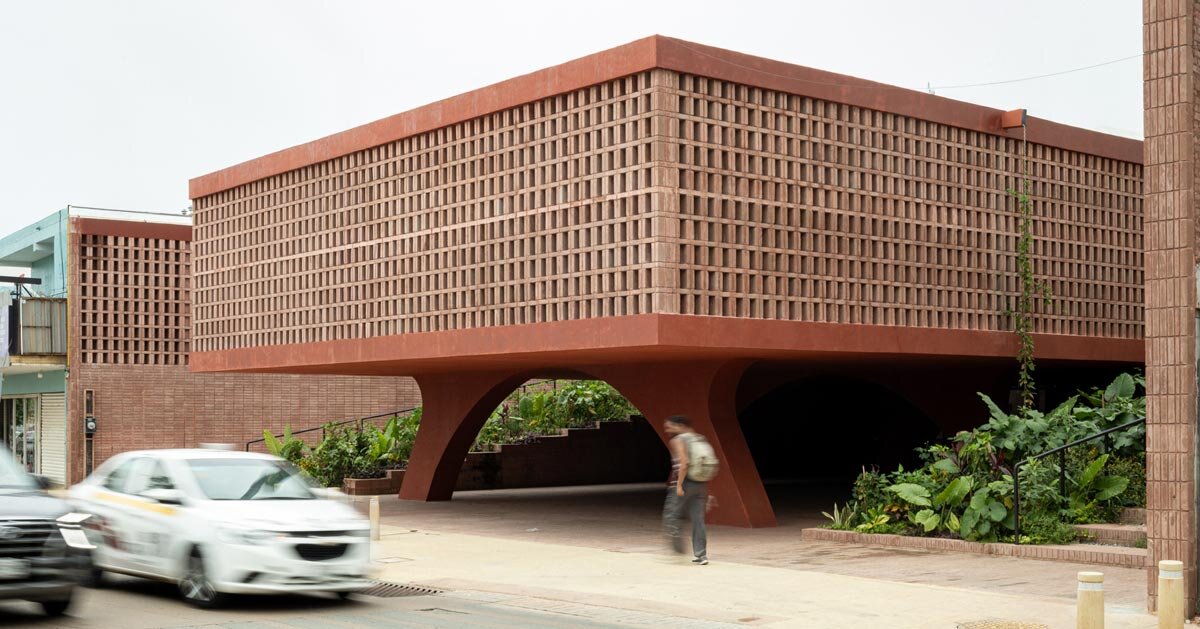
Regional Museum La Cacaotera, situated in Villahermosa's Malecón area, honors Tabasco's cacao production legacy. Designed by Laboratorio Regional de Arquitectura, Taller | Mauricio Rocha, and Samuele Xompero, the museum replaced a structurally damaged building while preserving its formal memory. The facility features exhibition spaces documenting cacao's cultural significance and transformation into chocolate, alongside functional workshops equipped with grinding, roasting, and shelling machines demonstrating production processes. The architecture employs red-pigmented reinforced concrete, latticework, clay floors, glass, and iron, complemented by endemic Grijalva River vegetation. High-relief mosaic artworks by Alejandra Cámara and Tabasco artisans depict cacao culture elements and regional biodiversity, integrating the museum with its urban context.
"The project was undertaken by the collaborative team of Laboratorio Regional de Arquitectura, Taller | Mauricio Rocha, and Samuele Xompero after the demolition of the building that once housed the National Union of Cacao Producers, and which had suffered severe structural damage. The building's architecture incorporates the formal memory of its predecessor, but with a new program dedicated to showcasing the transformation of cacao into chocolate."
"The building features an exhibition space that tells the story of cacao and its cultural impact, complemented by a workshop area where, through the use of grinding, roasting, and shelling machines (among others), the production processes are explained to the visitors."
"The creative team, including Laboratorio Regional de Arquitectura, Taller | Mauricio Rocha, and Samuele Xompero, selects reinforced concrete with red pigment as the dominating material. The project's materiality is visible in the structure, complemented by latticework and clay floors, glass, and iron. Endemic vegetation from the banks of the Grijalva River is also incorporated into this palette, integrating the Regional Museum La Cacaotera with its urban context."
"It is worth highlighting the integration of high-relief mosaic works depicting elements of cacao culture, as well as the region's endemic flora and fauna. These pieces were created by artist Alejandra Cámara in collaboration with artisans from the state of Tabasco."
#cacao-heritage-museum #regional-architecture #cultural-exhibition #tabasco-production #mosaic-art-integration
Read at designboom | architecture & design magazine
Unable to calculate read time
Collection
[
|
...
]