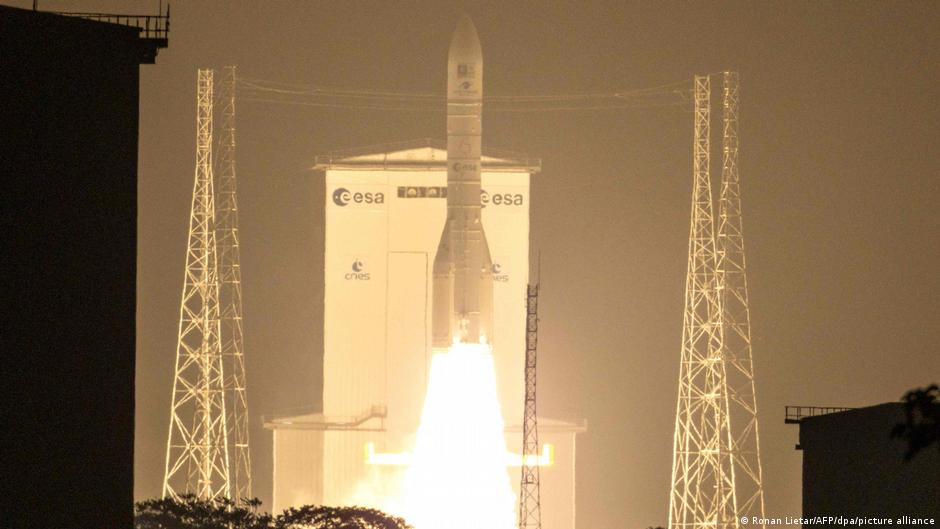
Ariane 6 lifted off from the Kourou space base in French Guiana at 2:01 a.m. (0501 GMT), carrying two Galileo satellites. The expendable Ariane 6 entered service last year, succeeding Ariane 5 which last launched a Galileo satellite in 2018. Europe relied on Russian and US rockets for Galileo deployments since 2018, with the previous Galileo launch carried by SpaceX Falcon 9 from Florida in September 2024. The two new satellites increase the Galileo constellation to 24 and were expected to reach medium Earth orbit about four hours after liftoff. The additions provide spares to improve robustness and guarantee 24/7 navigation for billions. Both satellites were built by German company OHB, enhancing precision and resilience.
"The Ariane 6 expendable rocket only came into service last year, following the Ariane 5 that last carried a Galileo satellite in 2018. Since then, the EU has been reliant on Russian until the invasion of Ukraine and US rockets. The Galileo program itself is also aglobal navigation satellite system aimed at making the EU less dependent on the US's Global Positioning System (GPS)."
"The addition of the two new satellites, which were set to arrive in orbit some four hours after lift-off, "will improve the robustness of the Galileo system by adding spares to the constellation to guarantee the system can provide 24/7 navigation to billions of users," the European Space Agency (ESA) said. "The satellites will join the constellation in medium Earth orbit 23, 222 km (14,429 miles) above Earth's surface," it added."
Read at www.dw.com
Unable to calculate read time
Collection
[
|
...
]