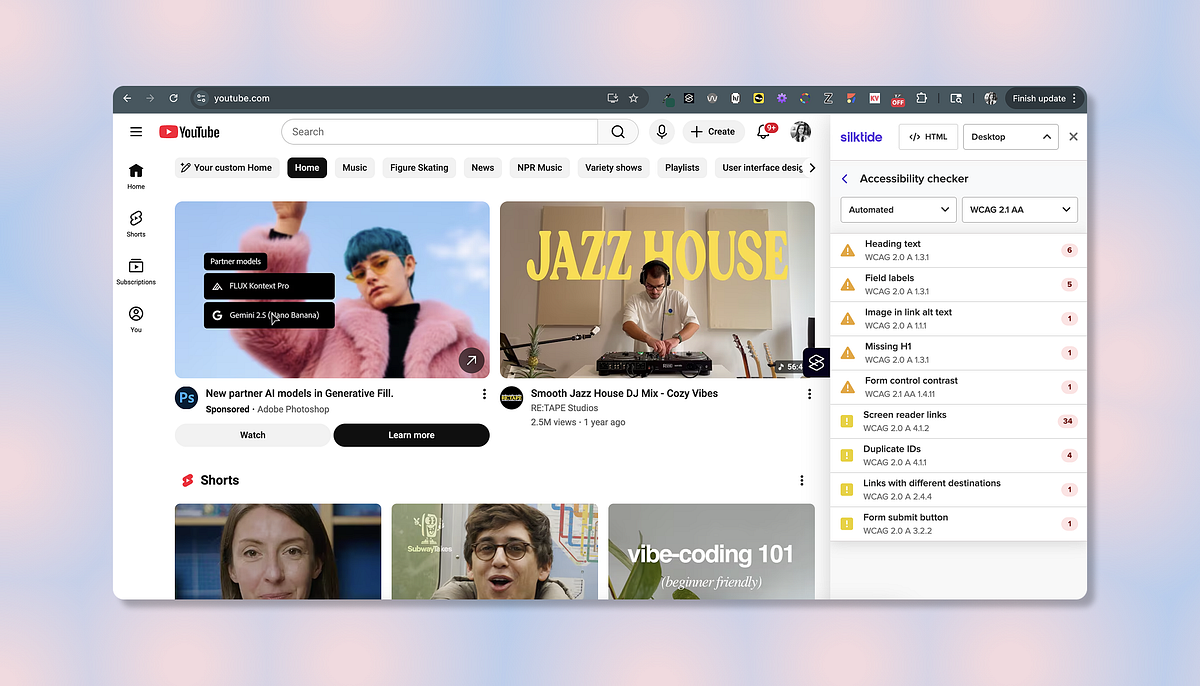
"While these tools can catch accessibility issues early, they don't provide a complete picture or reflect how usable an experience is. It's estimated that these automated tools only catch up to 40% of issues, according to Applause. Not only are they not reliable in catching issues like inappropriate alt text or illogical reading order, but they can also produce false positives."
"Web accessibility isn't just about whether a webpage has a "good" accessibility score or "passes" the scan. It's more about whether users can understand, navigate, and interact with an experience effectively."
"When they're used together, they help uncover issues that automated scans alone miss. Automated accessibility scanners offer a quick evaluation of a webpage by identifying common issues such as missing form labels or "empty" links."
Automated accessibility scanners provide quick identification of common issues like missing labels and low color contrast, but they only detect approximately 40% of accessibility problems. These tools cannot reliably catch issues such as inappropriate alt text, illogical reading order, or evaluate the actual usability of an experience. They may also generate false positives for elements exempt from certain requirements. Web accessibility extends beyond passing automated scans to ensuring users can effectively understand, navigate, and interact with experiences. A comprehensive approach combines automated scanners with manual and experiential testing methods to uncover issues that automated tools alone miss.
#web-accessibility-testing #automated-scanners-limitations #manual-testing #user-experience-evaluation #accessibility-auditing
Read at Medium
Unable to calculate read time
Collection
[
|
...
]