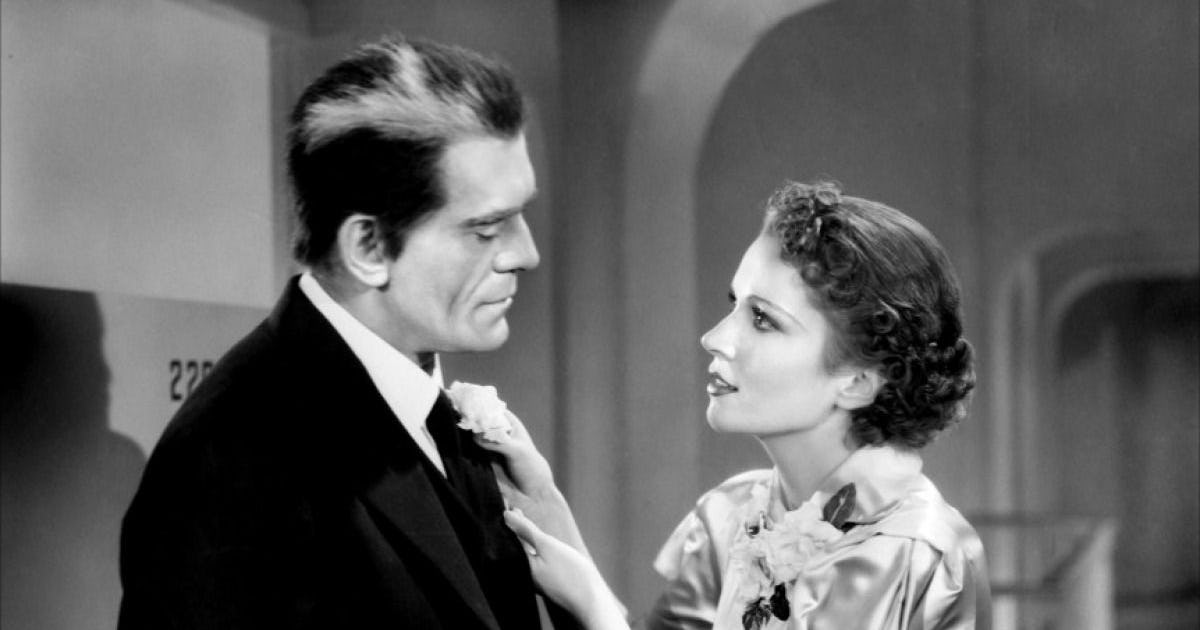
"Find something that nobody else can do or will do... there's nothing wrong with that. Years later, he would advise Christopher Lee that typecasting could be a blessing, demonstrating Karloff's philosophical acceptance of his career trajectory and his recognition that specialization in a particular niche could provide both security and artistic fulfillment throughout one's professional life."
"Karloff's extensive B-movie resume belies his depth and versatility as an actor. Debuting 90 years ago today, 1936's The Walking Dead provides a crossover point between his many Frankenstein copycat roles and his ability to wring emotional authenticity from silly material, showcasing his range beyond monster characterizations."
"The Walking Dead is a chaotic mash-up of three popular 1930s subgenres: gangster movies, mad scientist horror stories, and preachy morality tales about crime and punishment. Recently released from jail, the down-on-his-luck John Ellman is an easy mark for wealthy racketeers who frame him for murder and have him executed."
Boris Karloff became typecast as monsters and villains following his iconic Frankenstein role, appearing in numerous horror and sci-fi films. Rather than resisting this casting, Karloff embraced it and later advised Christopher Lee that typecasting could be advantageous. Much of his work has become obscure due to lost silent films and Frankenstein's overshadowing legacy. However, his extensive B-movie career reveals considerable depth and versatility. The 1936 film The Walking Dead, directed by Michael Curtiz, exemplifies this range by combining gangster, mad scientist horror, and crime morality tale elements. The plot follows John Ellman, recently released from jail, who is framed for a judge's murder by wealthy racketeers and sentenced to death, only to be mysteriously revived.
#boris-karloff #1930s-horror-cinema #typecasting-in-hollywood #the-walking-dead-1936 #actor-versatility
Read at Inverse
Unable to calculate read time
Collection
[
|
...
]