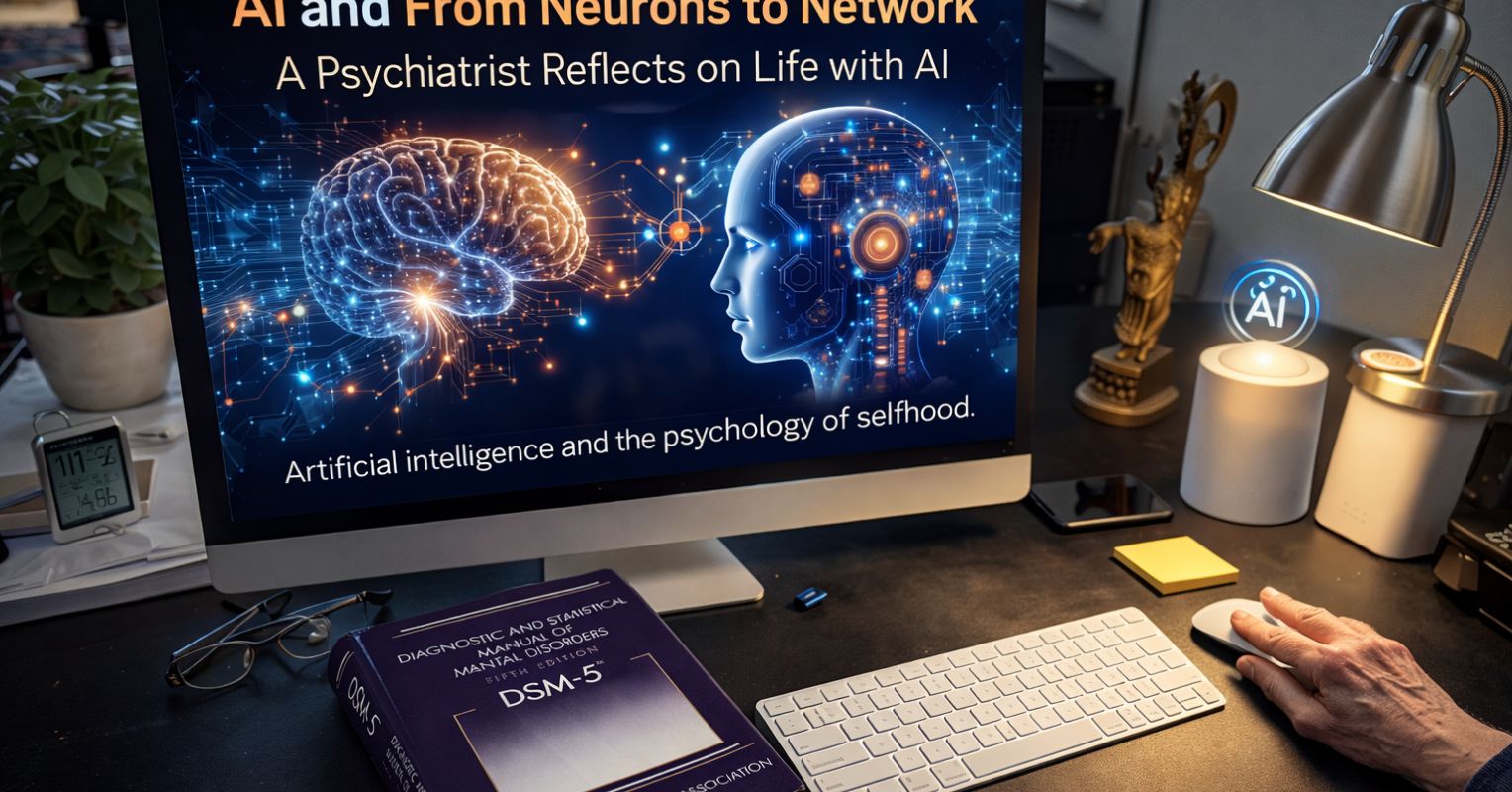
"I still remember the first time a machine seemed to respond to me. Not dramatically-no flashing lights or cinematic revelation-but quietly, almost casually. I typed a question, it responded, and a flicker of recognition stirred. It wasn't human intelligence, but it was responsive. Something about it activated a familiar clinical intuition: this mattered, psychologically. Looking back, I see how long that moment had been in the making."
"I first encountered AI in the mid-1960s, when it felt more like philosophy than science. Computers filled rooms, tended by specialists, and the claim that they might one day "think" seemed bold. Early pioneers spoke with missionary conviction: human reasoning could be formalized, symbolized, programmed. I carried that idea, not knowing how it would unfold. If reasoning could exist outside the body, what anchored human uniqueness? That question never fully receded. It resurfaced years later during my training in psychiatry and psychoanalysis."
Artificial intelligence evolved from a speculative, philosophy-like enterprise into a psychological mirror reflecting human cognition and identity. Early computational models formalized reasoning but failed to capture emotion, meaning, and relational depth. Machines became responsive in ways that triggered clinical intuitions about psychological significance. Cultural optimism waned as capabilities clarified limits: calculation without understanding. Networked and generative AI externalized attention, imagination, and aspects of identity, raising risks to inner life and autonomy. Mindfulness and reflective practices function as safeguards that preserve human depth, agency, and moral reflection amid accelerating artificial cognition and pervasive computational influence.
Read at Psychology Today
Unable to calculate read time
Collection
[
|
...
]