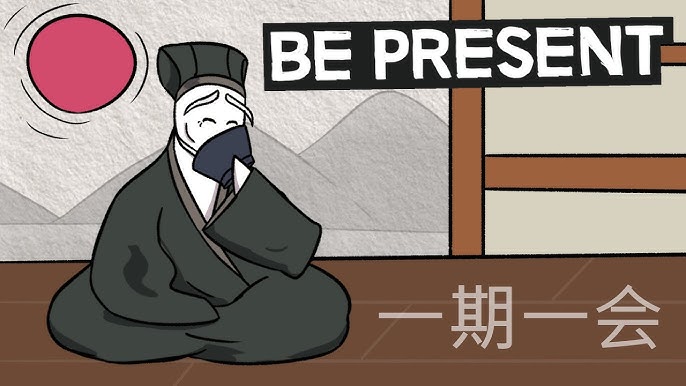
"The Bud­dhis­ti­cal­ly inflect­ed " ichi-go ichi‑e" is just one in the vast library of yoji­juku­go, high­ly con­densed apho­ris­tic expres­sions writ­ten with just four char­ac­ters. (Oth­er coun­tries with Chi­nese-influ­enced lan­guages have their ver­sions, includ­ing sajaseon­geo in Korea and chéngyǔ in Chi­na itself.) It descends, as the sto­ry goes, from a slight­ly longer say­ing favored by the six­teenth-cen­tu­ry tea mas­ter Sen no Rikyū, " ichi-go ni ichi-do " (一期に一度)."
"One must pay respects to the host of a tea cer­e­mo­ny because the meet­ing would only ever occur once - which, of course, it would, even if the cer­e­mo­ny was a reg­u­lar­ly sched­uled event. For we nev­er, to bor­row an ancient Greek take on this whole sub­ject, step into the same riv­er twice; no two events, sep­a­rat­ed in time, can ever tru­ly be iden­ti­cal."
Ichi-go ichi-e (一期一会) literally means "one time, one meeting" and emphasizes the uniqueness and transience of each encounter. The phrase carries Buddhist inflection and belongs to yoji-jukugo, condensed four-character idioms shared across East Asia. The expression evolved from Sen no Rikyū's sixteenth-century tea saying "ichi-go ni ichi-do" and informs etiquette in the tea ceremony: participants honor the host because each gathering is singular. Comparable sayings exist in Korean sajaseongeo and Chinese chéngyǔ. The concept reflects a philosophical recognition that no two moments separated in time can be identical, stressing mindful presence and reverence.
Read at Open Culture
Unable to calculate read time
Collection
[
|
...
]