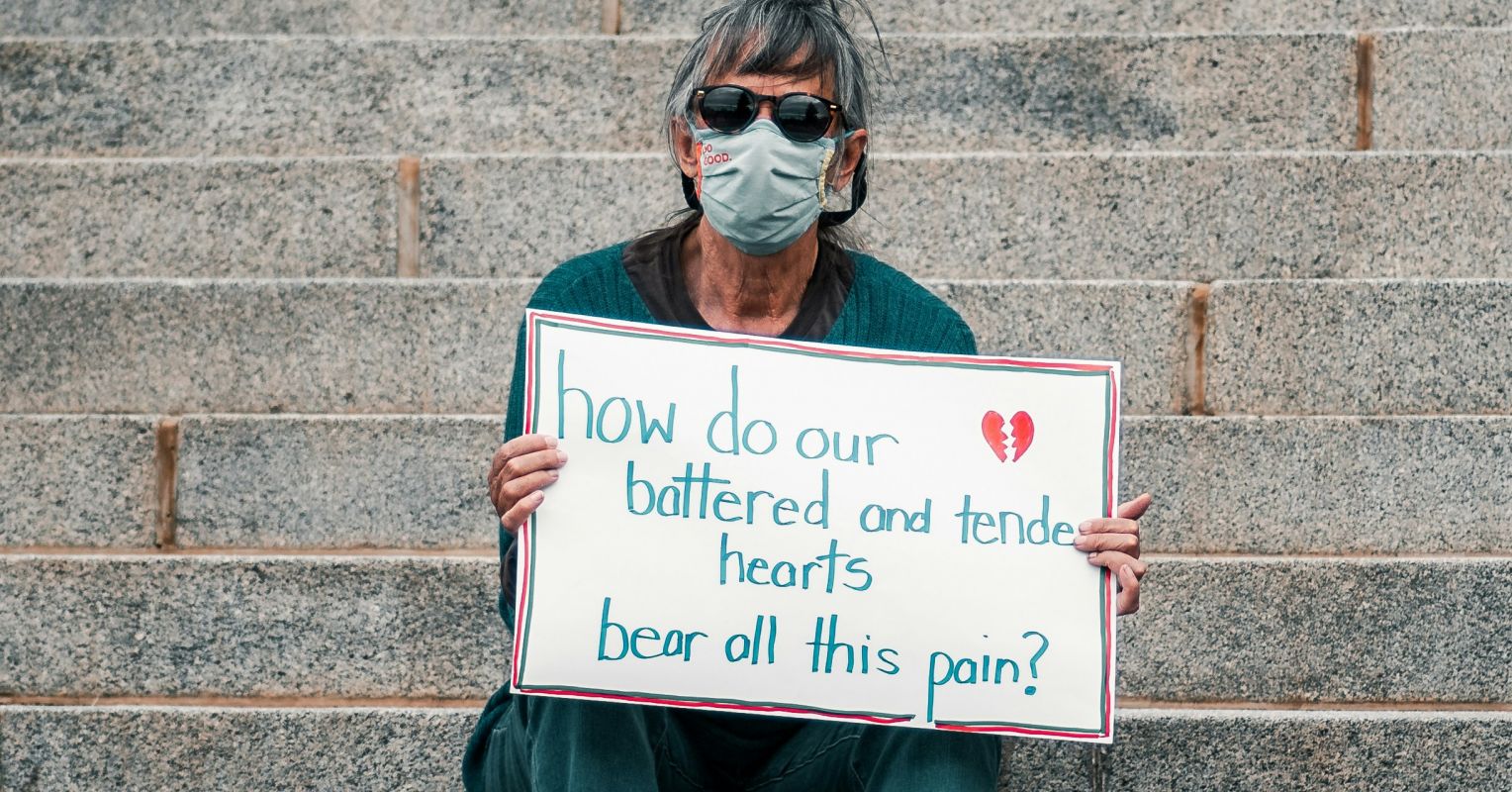
"Research demonstrates how sociopolitical violence against marginalized populations (e.g., immigrants, Black individuals, trans people) negatively impacts mental illnesses (i.e., depression, anxiety, PTSD) (Wang & Narcisse, 2025; Williams, Osman & Hyon, 2023; Grinshteyn, Whaley & Couture, 2022). Despite this challenge, we must find a means to live our ordinary lives under extraordinary conditions. Many of us navigate multiple roles (e.g., caregiver, parent, immigrant, professional, partner), each demanding its own form of care."
"Care as Affect Holding Emotions are affective cues that inform us about ourselves in relation to our environment and, at times, communicate to us before we know an internal conversation has begun. In relation to care, emotions may signal to us that our environment is too demanding and we have needs (psychic or physical) that must be attended to. During times of instability, feelings of anger, numbness, guilt, shame, and fatigue can be protective (Heilman, 2022);"
Sociopolitical violence against marginalized groups increases risk for depression, anxiety, and PTSD and complicates everyday life. People juggle multiple roles that each require distinct kinds of care while living under unstable, threatening conditions. Emotions function as affective cues that reveal when environments are overly demanding and when psychic or physical needs require attention. Anger, numbness, guilt, shame, and fatigue can serve protective purposes rather than being signs of failure. Care involves observing and honoring these emotional signals, seeking community with others who share similar experiences, and linking individual care practices to collective survival and mutual support.
Read at Psychology Today
Unable to calculate read time
Collection
[
|
...
]