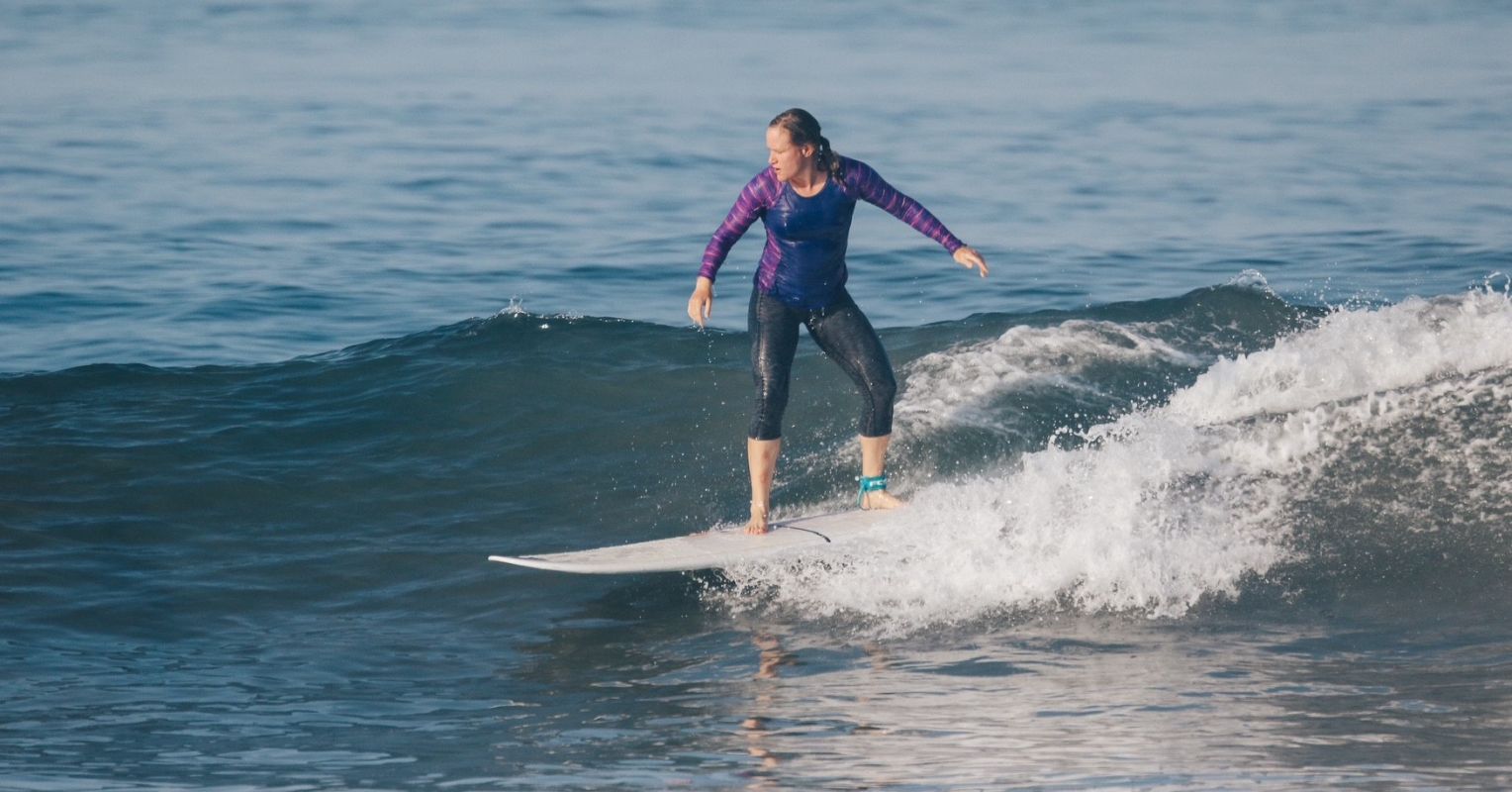
"I have had the privilege of taking veterans surfing on the Oregon Coast since 2019. Before each session, there is a nervous energy-some have never touched a surfboard, others have not been in the ocean since childhood. Once veterans hit the water together, something shifts. Laughter breaks the tension. Each effort is cheered on. Veterans look out for each other. Those new to the sport watch experienced surfers catching waves outside. The sense of safety, joy, and belonging-so often lost after trauma -is palpable."
"In a recent randomized controlled trial with vets who have PTSD and major depressive disorder (MDD), hiking and surfing were shown to have equal efficacy (Otis et al., 2024). And yet, a subset of high-performing veterans I have worked with needed something as difficult as surfing to take them out of the war in their mind. Once, after I worked with a veteran in the water for three hours, he finally dragged himself out of the ocean, exhausted."
Surf therapy combines ocean exposure, physical challenge, sensory richness, and community support to reduce symptoms of PTSD and major depressive disorder and foster presence, belonging, and awe. Group surf sessions create safety, mutual encouragement, and social connection that veterans describe as familial. A randomized controlled trial showed hiking and surfing had equal efficacy for vets with PTSD/MDD, and one study reported 58 percent remission after six weeks of surf or hike therapy. Surfing also supports addiction recovery, autistic individuals, at-risk youth, and people with physical disabilities by offering meaningful engagement, sensory regulation, and experiences of awe that facilitate healing.
Read at Psychology Today
Unable to calculate read time
Collection
[
|
...
]