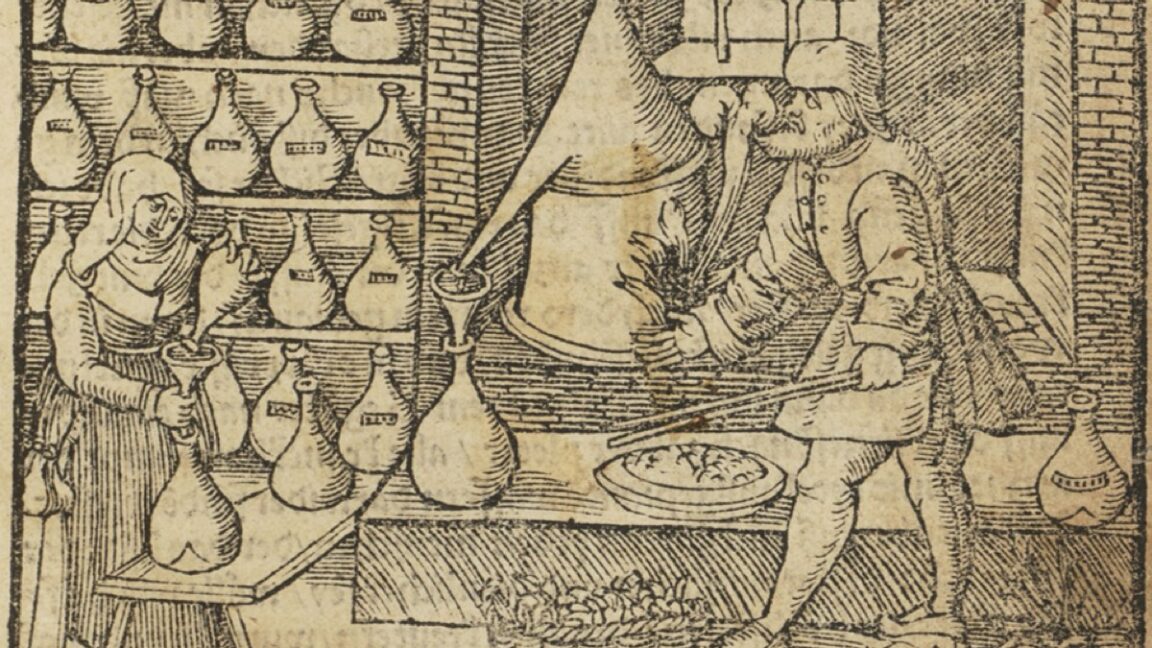
""Reader-practitioners" would tinker with the various recipes, tweaking them as needed and making personalized notes in the margins. And they left telltale protein traces behind as they did so. The team reported their findings in a paper published in The American Historical Review. It's the first time researchers have used proteomics to analyze Renaissance recipes, enhanced further by in-depth archival research to place the scientific results in the proper historical context."
""We have so many recipes of that time, [including] cosmetic, medical, and culinary recipes, as well as handwritten recipes passed down for generations. It's really a key element of Renaissance culture, and [the manuscripts] are all covered with scribbled marginalia of [past] users. Experimentation was everywhere. It's not only about book-learned knowledge but hands-on practical knowledge. It's a key change in the way people constructed knowledge at that time.""
Researchers analyzed trace proteins from fingerprints on 16th-century medical manuals to understand how Renaissance people created and modified home remedies. These "reader-practitioners" treated medical texts as DIY guides, tweaking recipes and annotating margins with personalized notes. An interdisciplinary team of archaeologists, chemists, historians, conservators, and materials scientists used proteomics combined with archival research to study these manuscripts. This represents the first application of proteomics to Renaissance recipes. The findings reveal that 16th-century knowledge construction combined book learning with hands-on experimentation, fundamentally changing how people approached medical and practical knowledge.
#renaissance-medicine #proteomics-analysis #historical-manuscripts #diy-experimentation #knowledge-construction
Read at Ars Technica
Unable to calculate read time
Collection
[
|
...
]