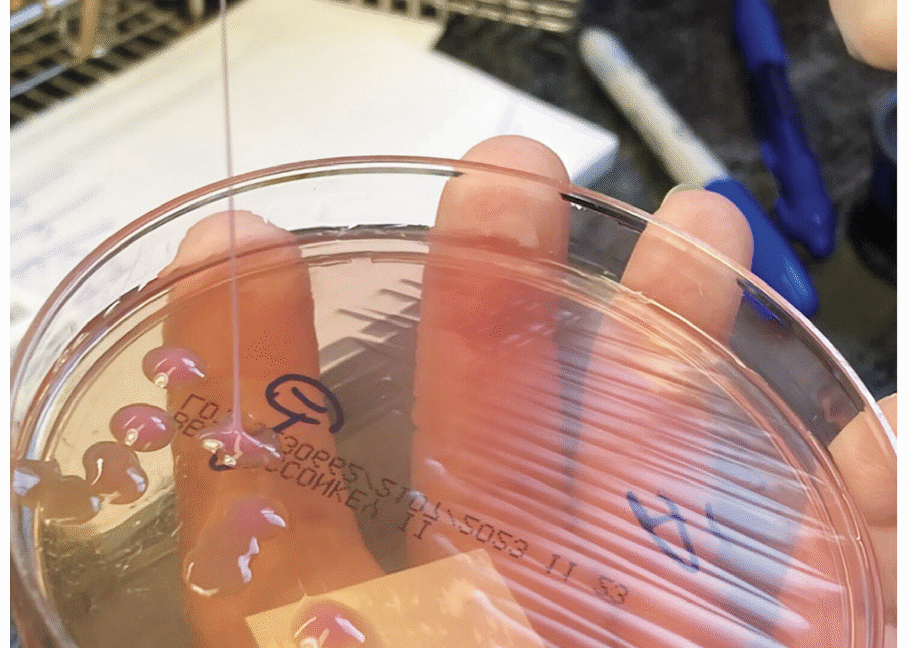
Hypervirulent Klebsiella pneumoniae (hvKP) is a highly invasive strain that emerged in the 1980s and targets healthy people in community settings. hvKP commonly produces liver abscesses and then spreads via the bloodstream to the lungs, brain, skin, soft tissues, and eye, causing metastatic infections such as endogenous endophthalmitis. Classical K. pneumoniae typically resides in intestinal tracts and causes healthcare-associated infections in vulnerable patients, whereas hvKP carries enhanced virulence. Definitive identification remains difficult; a 2024 strategy screens for five plasmid-borne virulence genes, but overlap with classical strains means diagnostic methods are imperfect.
"Classical K. pneumoniae is a germ that dwells in people's intestinal tracts and is one that's familiar to doctors. It's known for lurking in health care settings and infecting vulnerable patients, often causing pneumonia or urinary tract infections. But hvKP is very different. In comparison, it's a beefed-up bacteria with a rage complex. It was first identified in the 1980s in Taiwan-not for stalking weak patients in the hospital but for devastating healthy people in normal community settings."
"An infection with hvKP-even in otherwise healthy people-is marked by metastatic infection. That is, the bacteria spreads throughout the body, usually starting with the liver, where it creates a pus-filled abscess. It then goes on a trip through the bloodstream, invading the lungs, brain, soft tissue, skin, and the eye (endogenous endophthalmitis). Putting it all together, the man had a completely typical clinical case of an hvKP infection."
"Still, definitively identifying hvKP is tricky. Mucus from the man's respiratory tract grew a species of Klebsiella, but there's not yet a solid diagnostic test to differentiate hvKP from the classical variety. Since 2024, researchers have worked out a strategy of using the presence of five different virulence genes found on plasmids (relatively small, circular pieces of DNA, separate from chromosomal DNA, that can replicate on their own and be shared among bacteria.)"
Read at Ars Technica
Unable to calculate read time
Collection
[
|
...
]