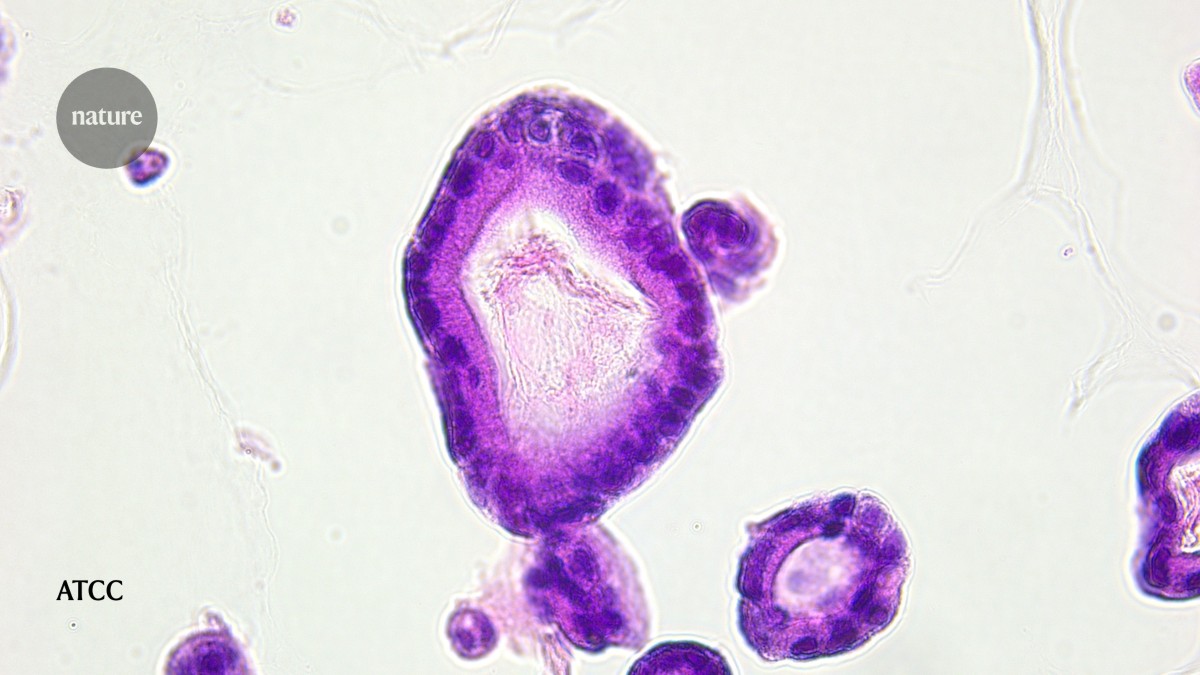
Patient-derived organoids are miniature 3D replicas of pancreatic tumours grown from a person's cells. Pilarsky's method produced organoids from six out of every ten donors after iterative optimization. Robust models enable testing treatments, studying early detection, and investigating tumor aggressiveness and therapy resistance without clinical trials. Pancreatic cancer has one of the lowest survival rates among major cancers. Additional modelling tools include engineered animal models, xenografts of human tumour cells, and computational approaches using artificial intelligence to find patterns in patient records. These models capture tumor diversity more quickly and at lower cost than older techniques.
"Christian Pilarsky vividly remembers the moment, in 2022, when he realized that his technique for modelling pancreatic cancer had finally worked. A molecular biologist at the University Hospital Erlangen in Germany, Pilarsky had been struggling for three years to perfect the method, which involves growing miniature 3D replicas of pancreatic tumours derived from a person's cells. "Trying this and trying that" and correcting errors along the way,"
"Robust models of pancreatic cancer, such as Pilarsky's organoids, are increasingly a key component of developing treatments for pancreatic cancer, which has one of the lowest survival rates of all major cancers. Models are used in research to improve treatments and detect the disease before it spreads beyond the pancreas. They are also used to investigate fundamental questions about the cancer's aggressive nature and its resistance to therapies."
Read at Nature
Unable to calculate read time
Collection
[
|
...
]