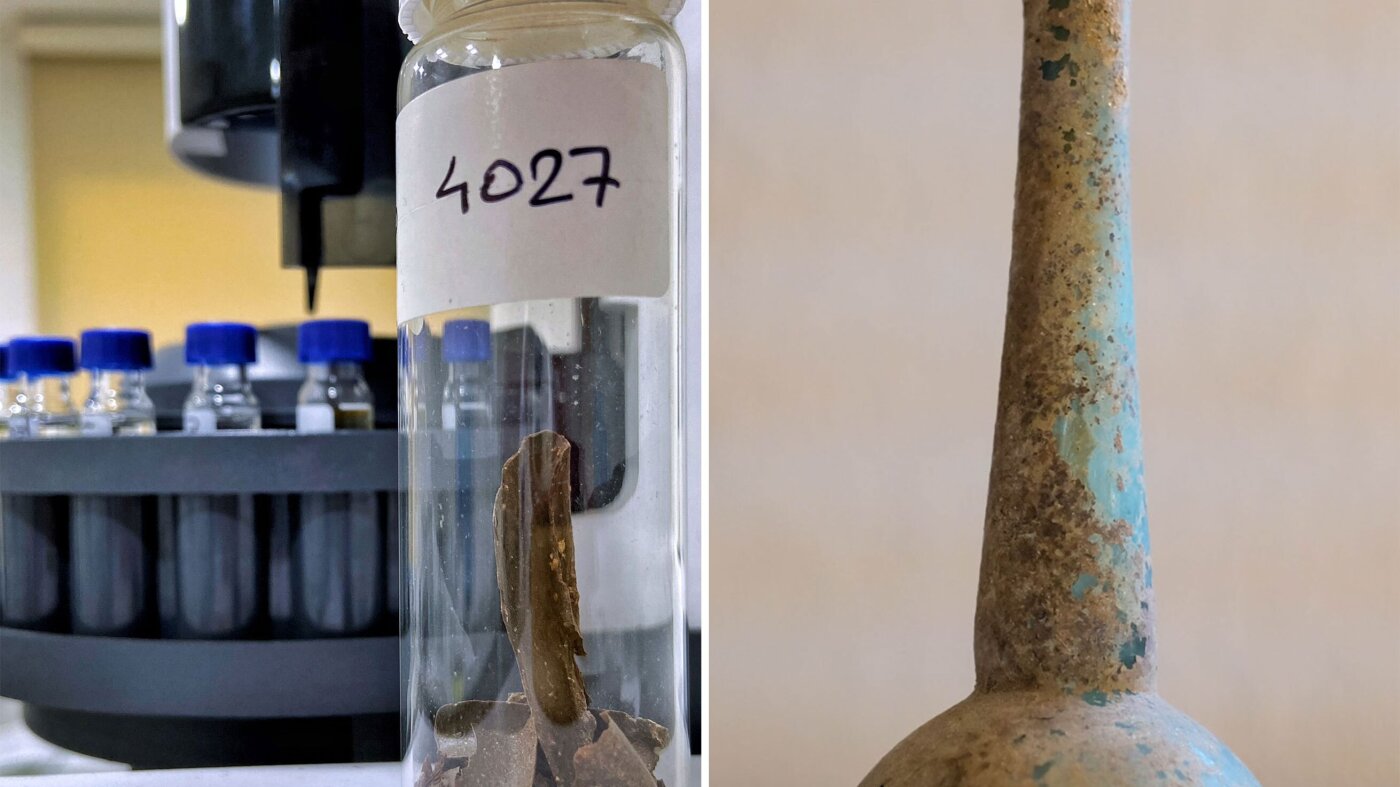
"Some of the earliest writings including those inscribed on papyrus in Egypt and later in ancient Greece and Rome contain recipes for making medicines. Finding physical proof, however, that confirms such recipes were prepared and used to treat actual ailments in antiquity is rare. Now, in research published in the Journal of Archaeological Science: Reports, researchers describe chemical evidence of a medicinal recipe penned more than two millennia ago by Galen, the famous Greek physician of ancient Rome."
"Medicinal poop isn't just a thing of the past. Some modern physicians have started using it as a kind of gut microbiome reset for those struggling with a debilitating kind of GI infection caused by the bacterium Clostridium difficile, and are researching it for other uses. Rather than mixing it with aromatics to make it more palatable, today the excrement is sealed inside a pill or transplanted into the large intestine."
"The recently published project began several years ago when Atila Cenker, an archaeologist at Sivas Cumhuriyet University, approached Celebi and told her that he had access to a collection of ancient Roman vessels called unguentaria, long thought to be perfume bottles. Celebi leapt at the chance to work with "these exceptionally well-preserved ancient glass vessels," she says. She was hoping to find traces of an ancient perfume in the long-necked bottles,"
Chemical analysis of ancient Roman unguentaria revealed residues consistent with a medicinal preparation described by Galen, combining human feces with aromatic substances to mask foul odors. Researchers identified compounds indicating both organic waste and fragrance in long-necked glass bottles originally thought to hold perfume. The finding provides rare, tangible evidence that written medical recipes were physically prepared and used. The discovery connected archaeological materials with classical medical practice using interdisciplinary chemical methods. Modern medical practice also uses human fecal material therapeutically, including sealed capsules and intestinal transplants to treat Clostridium difficile infections and as a topic of ongoing research.
Read at www.npr.org
Unable to calculate read time
Collection
[
|
...
]