"Brain cancers are the leading cause of cancer-related deaths in children and adolescents, surpassing leukaemia. Deciphering the developmental correlates is pivotal to therapeutic advancement as malignant cells retain molecular and phenotypic properties of their progenitor origins."
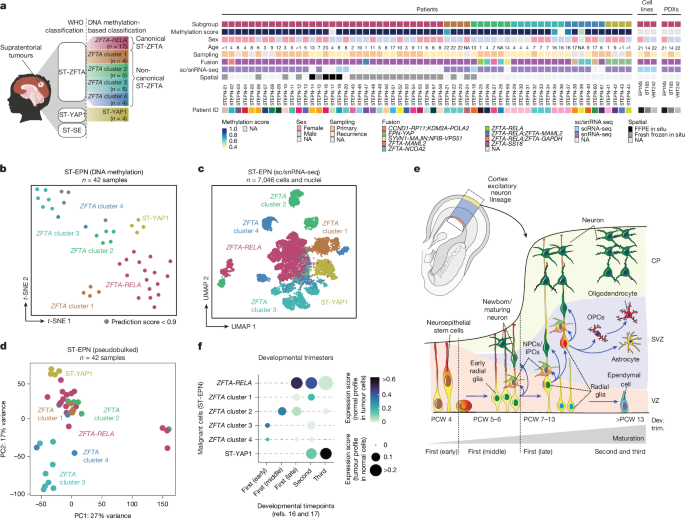
"Recent genome-wide DNA methylation profiling studies have classified ST-EPNs into multiple subgroups with distinct fusion genes and patient outcomes. These include the canonical ST-ZFTA subgroup, characterized by the fusion of NF-κB pathway regulator RELA with the zinc-finger-translocation-associated ZFTA, and the non-canonical ST-ZFTA subgroups, which have ZFTA-RELA fusions or fusions between ZFTA and other partner genes."
"It remains unclear whether these subgroups have distinct cellular origins and composition of malignant cell states, contributing to differences in outcomes and varying resistance to therapy. These limitations highlight the need for a comprehensive study examining the composition of malignant cell states of tumours across all subgroups of ST-EPNs."
Supratentorial ependymomas (ST-EPNs) are brain tumors representing a leading cause of cancer-related deaths in children and adolescents. Genome-wide DNA methylation profiling has identified multiple ST-EPN subgroups with distinct characteristics: the canonical ST-ZFTA subgroup featuring ZFTA-RELA fusion, non-canonical ST-ZFTA subgroups with various ZFTA fusions, and the ST-YAP1 subgroup enriched for YAP1 fusions. Previous single-cell and single-nucleus RNA sequencing studies have characterized molecular cell states but excluded non-canonical ST-ZFTA subgroups, resulting in sample-specific findings. Understanding whether these subgroups have distinct cellular origins and malignant cell state compositions is crucial for explaining outcome differences and therapeutic resistance. Comprehensive analysis across all ST-EPN subgroups is needed, considering both cell-intrinsic properties and microenvironmental influences on cancer cell diversity.
#supratentorial-ependymomas #molecular-subgroups-and-fusion-genes #malignant-cell-states #pediatric-brain-cancer #therapeutic-resistance
Read at Nature
Unable to calculate read time
Collection
[
|
...
]