"Lying on your back in a big hospital scanner, as still as you can, with your arms above your head for 45 minutes. It doesn't sound much fun. That's what patients at Royal Brompton Hospital in London had to do during certain lung scans, until the hospital installed a new device last year that cut these examinations down to just 15 minutes."
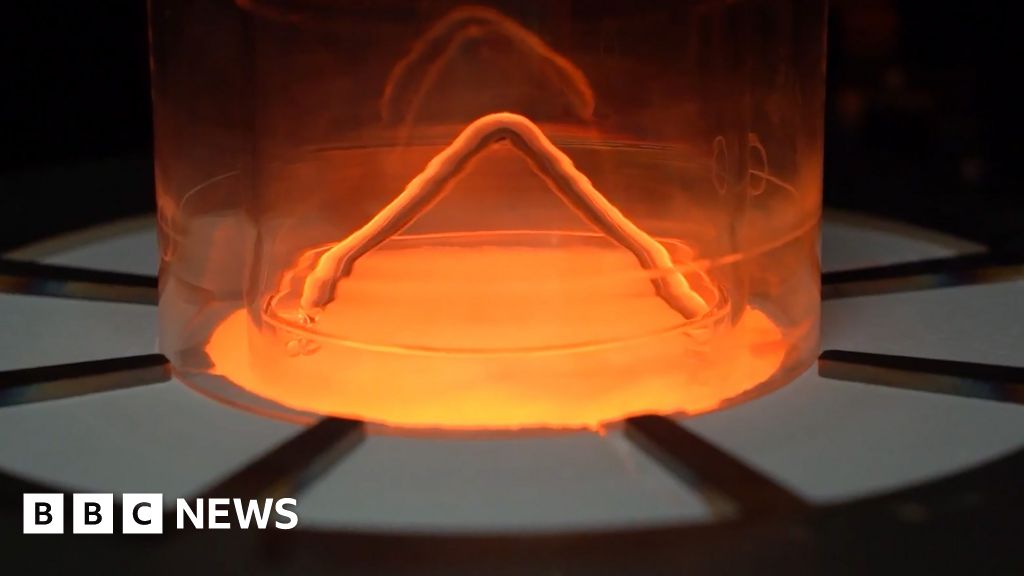
""You get beautiful pictures from this scanner," says Dr Kshama Wechalekar, head of nuclear medicine and PET. "It's an amazing feat of engineering and physics." The CZT in the machine, which was installed at the hospital last August, was made by Kromek a British company. Kromek is one of just a few firms in the world that can make CZT. You may never have heard of the stuff but, in Dr Wechalekar's words, it is enabling a "revolution" in medical imaging."
"This wonder material has many other uses, such as in X-ray telescopes, radiation detectors and airport security scanners. And it is increasingly sought-after. Investigations of patients' lungs performed by Dr Wechalekar and her colleagues involve looking for the presence of many tiny blood clots in people with long Covid, or a larger clot known as a pulmonary embolism, for example."
Cadmium zinc telluride (CZT) is a semiconductor material that enables highly detailed, three-dimensional medical imaging and increased scanner sensitivity. CZT-based lung scanners reduce examination time from 45 minutes to 15 minutes and lower radiotracer doses by about 30%, improving patient comfort and safety. CZT detectors produce high-resolution gamma-ray images, benefiting diagnoses such as tiny blood clots in long Covid and pulmonary embolism. CZT is difficult to manufacture, produced by only a few companies, and has growing demand. Other applications include X-ray telescopes, radiation detectors and airport security scanners.
Read at www.bbc.com
Unable to calculate read time
Collection
[
|
...
]