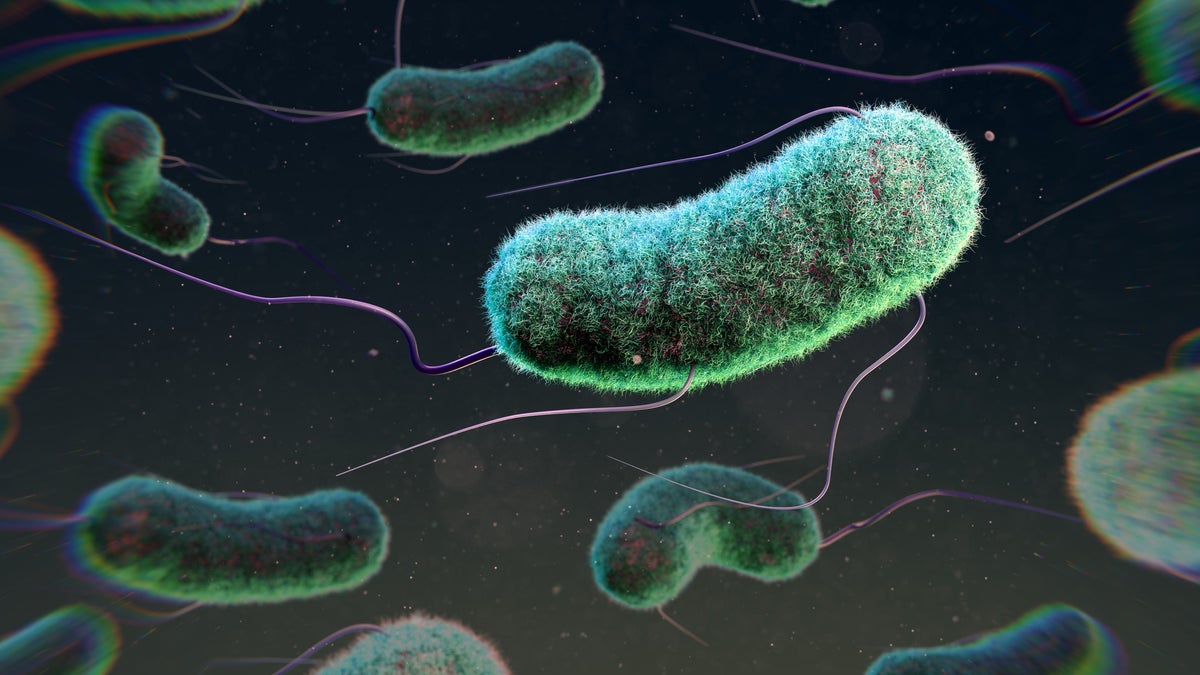
"Designed to sit inside your body and activate when needed to help fight infections at the source, the strategy could dispense with the need for pills, shots and even diagnostics. In a new study published in Science on Thursday, researchers describe successfully implanting a mouse with a living material made with genetically engineered bacteria to treat an infection. The technology, if validated in humans, could be used to help prevent infection in surgeries or as a long-term therapeutic that automatically responds to pathogens."
"Living medicine isn't totally new. Scientists already knew that bacteria can be programmed to sense pathogens and, when they do, self-destruct, releasing drugs to kill the invader. But researchers have been wary about such approaches. One of the big concerns that everyone has is that we're injecting live bacteria into our body, says Tetsuhiro Harimoto, the study's lead author and a postdoctoral fellow at Harvard University. We don't want them to disseminate and cause infections."
"To solve the problem, Harimoto and his colleagues built a hydrogel, or jellylike, container. It's permeable like a mesh, but stiff enough to contain a live and growing population of bacteria without bursting open, and strong enough to withstand some wear-and-tear. The material is similar to the tapioca pearls you might find in boba tea, but stiffer, Harimoto says. To ensure the bacteria wouldn't escape their hydrogel cage, the researchers ran the hydrogel through a series of stress tests, such as a fatigue experimentstretching"
Doctors must diagnose infections before treatment. A living-material approach uses an implant that sits inside the body and activates when pathogens are present. Researchers reported implanting a mouse with a hydrogel containing genetically engineered bacteria that treated an infection. The concept could enable prevention during surgeries or long-term therapy that automatically responds to pathogens. Prior work showed bacteria can be programmed to sense invaders and self-destruct while releasing drugs. A major concern is preventing live bacteria from escaping and causing new infections. To address this, researchers encapsulated bacteria in a permeable but stiff hydrogel that contains a growing bacterial population without bursting, and they tested durability under stress such as fatigue stretching.
#living-medicine #genetically-engineered-bacteria #hydrogel-implants #infection-treatment #drug-delivery
Read at www.scientificamerican.com
Unable to calculate read time
Collection
[
|
...
]