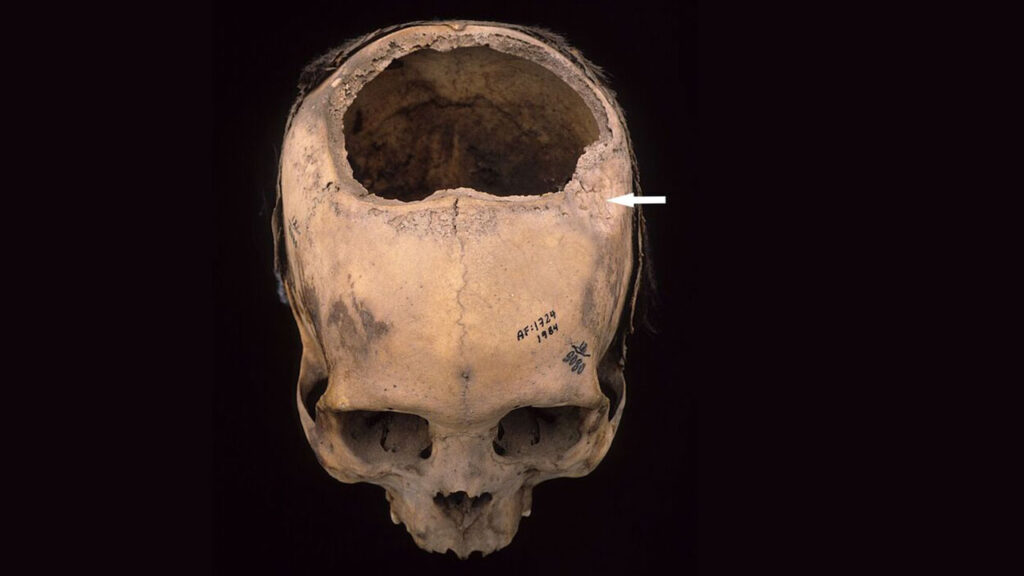
Inca surgeons performed trepanation frequently and with considerable sophistication, yielding better survival chances than similar Civil War battlefield procedures. Trepanation has existed since the Neolithic period and served multiple purposes, some medically compelling. The Inca civilization combined advanced practical technologies despite lacking an alphabet and wheeled vehicles. The Incas used khipu for record-keeping, practiced precision masonry, built an extensive road system, managed water effectively for agriculture and other uses, produced high-quality textiles, and utilized plant-derived antiseptics, which would have aided frequent cranial surgeries.
"Grant­ed access to a time machine, few of us would pre­sum­ably opt first for the expe­ri­ence of skull surgery by the Incas. Yet our chances of sur­vival would be bet­ter than if we under­went the same pro­ce­dure 400 years lat­er, at least if it took place on a Civ­il War bat­tle­field. In both fif­teenth-cen­tu­ry Peru and the nine­teenth-cen­tu­ry Unit­ed States, sur­geons were per­form­ing a lot of trepa­na­tion, or removal of a por­tion of the skull."
"Since the Neolith­ic peri­od, indi­vid­u­als had been trepanned for a vari­ety of rea­sons, some of which now sound more med­ical­ly com­pelling than oth­ers, but the Incan civ­i­liza­tion took it to anoth­er lev­el of fre­quen­cy, and indeed sophis­ti­ca­tion."
"The Incas may not have had wheeled vehi­cles or mechan­i­cal devices as we know them today, but they did have pre­ci­sion mason­ry, an exten­sive road sys­tem, advanced water man­age­ment for agri­cul­tur­al and oth­er uses, high-qual­i­ty tex­tiles, and plant-derived anti­sep­tic - some­thing more than a lit­tle use­ful if you also hap­pen to be cut­ting a lot of holes in peo­ple's skulls."
Read at Open Culture
Unable to calculate read time
Collection
[
|
...
]