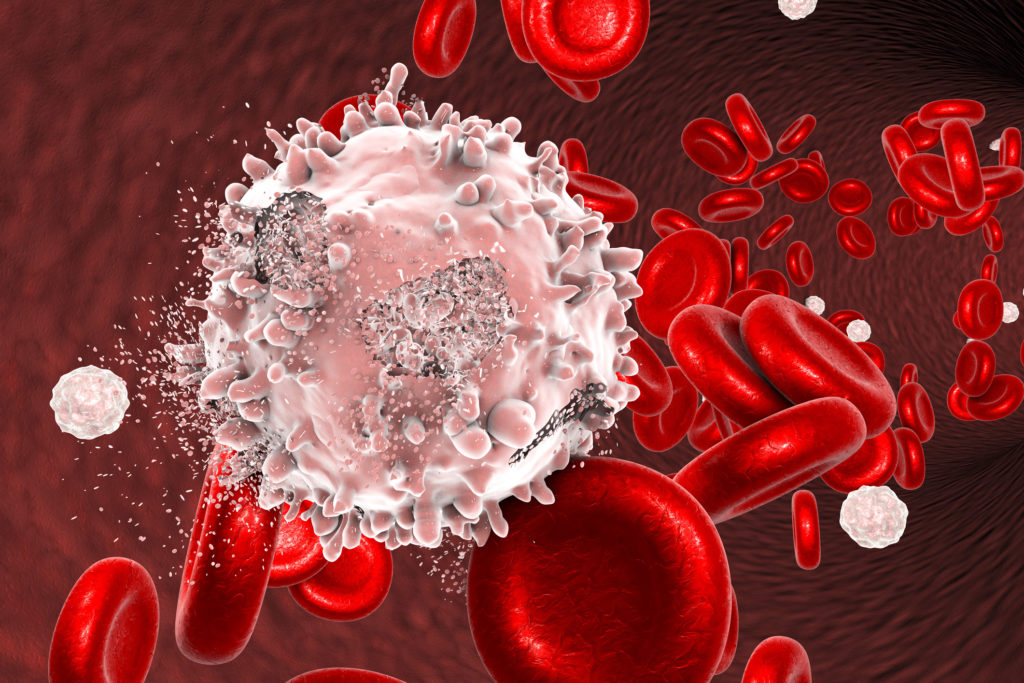
Clonal hematopoiesis (CH) is an age-related process in which blood-forming stem cells acquire mutations and create genetically distinct blood cell clones. Mutations in TP53 associate with higher progression to leukemia. Inflammatory stress selectively benefits TP53-mutant hematopoietic stem and progenitor cells (HSPCs), enabling their expansion while impairing normal cells. Inflammation activates the NLRP1 inflammasome, and mutant cells amplify inflammatory signaling, establishing a self-reinforcing cycle that weakens healthy cells. TP53 mutations alter RNA processing to sustain elevated inflammatory pathways. Chronic bone marrow inflammation driven by these mechanisms can ultimately lead to development of blood cancers such as leukemia.
"A Northwestern Medicine-led study published in The Journal of Clinical Investigation has uncovered why older individuals with specific genetic mutations face a heightened risk of developing serious blood cancers. Clonal hematopoiesis (CH) is an age‑related process in which blood-forming stem cells mutate and begin to produce a genetically distinct clone of blood cells. Though not cancer itself, CH arises silently in many otherwise healthy individuals."
"The team discovered that inflammation activates the NLRP1 inflammasome, a multiprotein complex in immune cells that acts like a sensor for danger. The mutant cells then release even more inflammatory signals, the study found, creating a vicious cycle that weakens normal cells and allows the mutated ones to take over."
"As people age, this process gets worse. The investigators analyzed mutant human blood cells and observed that TP53 mutations alter how cells process RNA, thereby activating pathways that keep inflammation elevated. This chronic inflammation in the bone marrow can eventually lead to blood cancers like leukemia."
Read at News Center
Unable to calculate read time
Collection
[
|
...
]