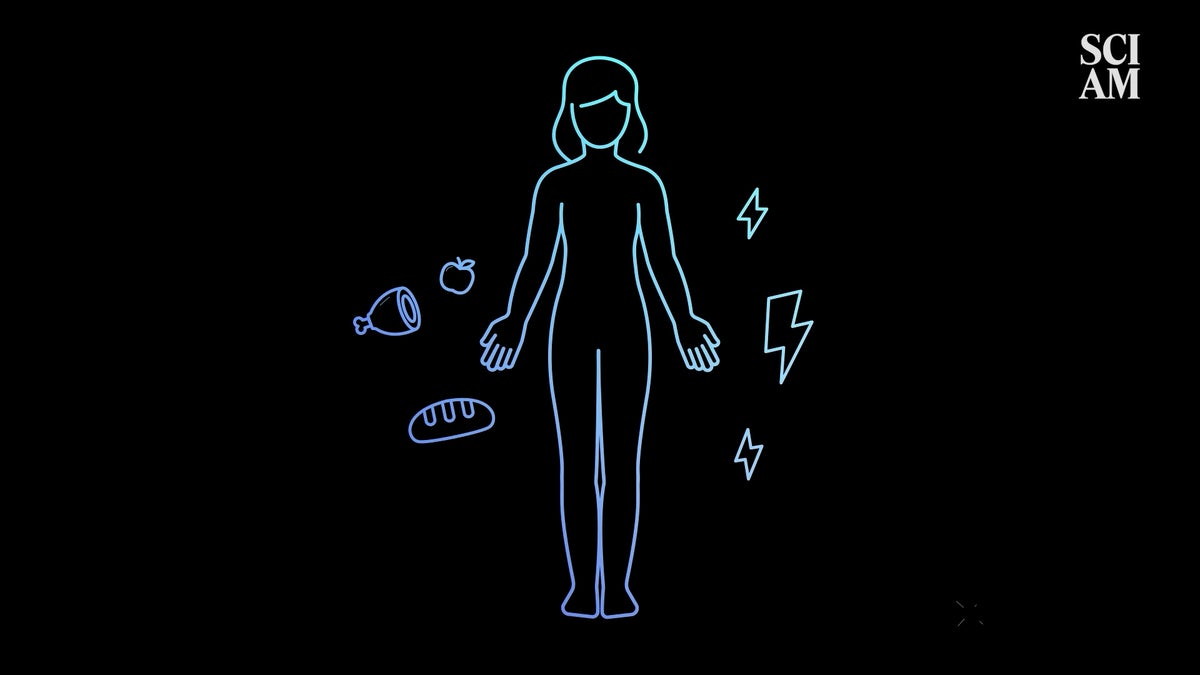
"When we eat, the glucose from our food gets stored in the liver as glycogen. And based on our body's needs, the liver will convert that glycogen back into glucose so that it can travel through the blood and get to our cells, which turn that glucose into energy. Meanwhile, our pancreas produces a hormone called insulin whose job is to go into the blood and tell our cells to take in that glucose."
"When the pancreas stops producing insulin, glucose doesn't enter our cells. Instead, it accumulates in the bloodstream. In some people, the pancreas stops making insulin altogether. This condition is known as type 1 diabetes. While the exact cause is mysterious, we know the disease happens because immune cells target and attack insulin-producing cells in the pancreas called beta cells. As those cells get destroyed, the body stops producing insulin and loses the key regulator of blood sugar levels."
Glucose from food is stored in the liver as glycogen and released back into the bloodstream as needed to supply cells with energy. The pancreas produces insulin, a hormone that signals cells to take in glucose and regulates blood sugar levels. When the pancreas stops producing insulin, glucose accumulates in the blood instead of entering cells. Type 1 diabetes arises when immune cells target and destroy insulin-producing beta cells in the pancreas, causing loss of insulin production. The exact cause is unknown. Loss of insulin can cause high blood sugar and symptoms such as fatigue and weakness. Technologies like glucose meters and insulin pumps have made type 1 diabetes treatable.
Read at www.scientificamerican.com
Unable to calculate read time
Collection
[
|
...
]