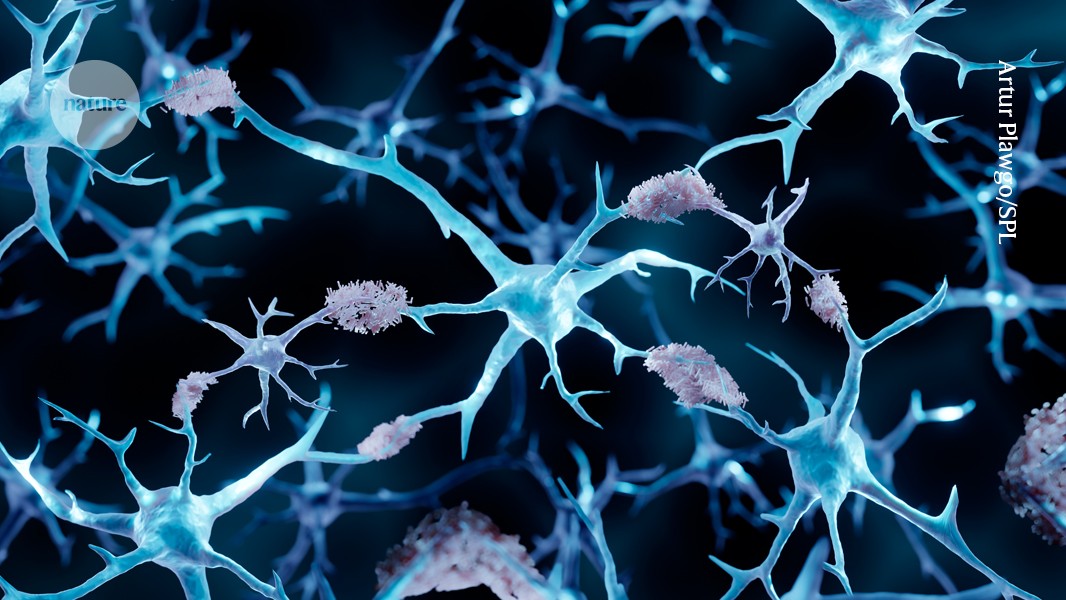
"For decades, researchers have noted that cancer and Alzheimer's disease are rarely found in the same person, fuelling speculation that one condition might offer some degree of protection from the other. Now, a study in mice provides a possible molecular solution to the medical mystery: a protein produced by cancer cells seems to infiltrate the brain, where it helps to break apart clumps of misfolded proteins that are often associated with Alzheimer's disease. The study, which was 15 years in the making, was published on 22 January in Cell and could help researchers to design drugs to treat Alzheimer's disease."
"Epidemiological data do not draw such a clear divide, but a 2020 meta-analysis of data from more than 9.6 million people found that cancer diagnosis was associated with an 11% decreased incidence of Alzheimer's disease. It has been a difficult relationship to unpick: researchers must control for a variety of external factors. For example, people might die of cancer before they are old enough to develop symptoms of Alzheimer's disease, and some cancer treatments can cause cognitive difficulties, which could obscure an Alzheimer's diagnosis."
A protein produced by cancer cells appears to infiltrate the brain and dismantle aggregates of misfolded proteins associated with Alzheimer's disease. Experiments in mice demonstrate that the cancer-derived protein reduces clumping of pathological proteins, offering a molecular mechanism that could explain an inverse relationship between cancer and Alzheimer's incidence. Population-level analyses of over 9.6 million people indicate an approximate 11% reduced incidence of Alzheimer's following cancer diagnosis, though premature mortality and cognitive effects of cancer treatments complicate interpretation. Identification of the protein opens avenues for drugs that mimic its disaggregating effects.
Read at Nature
Unable to calculate read time
Collection
[
|
...
]