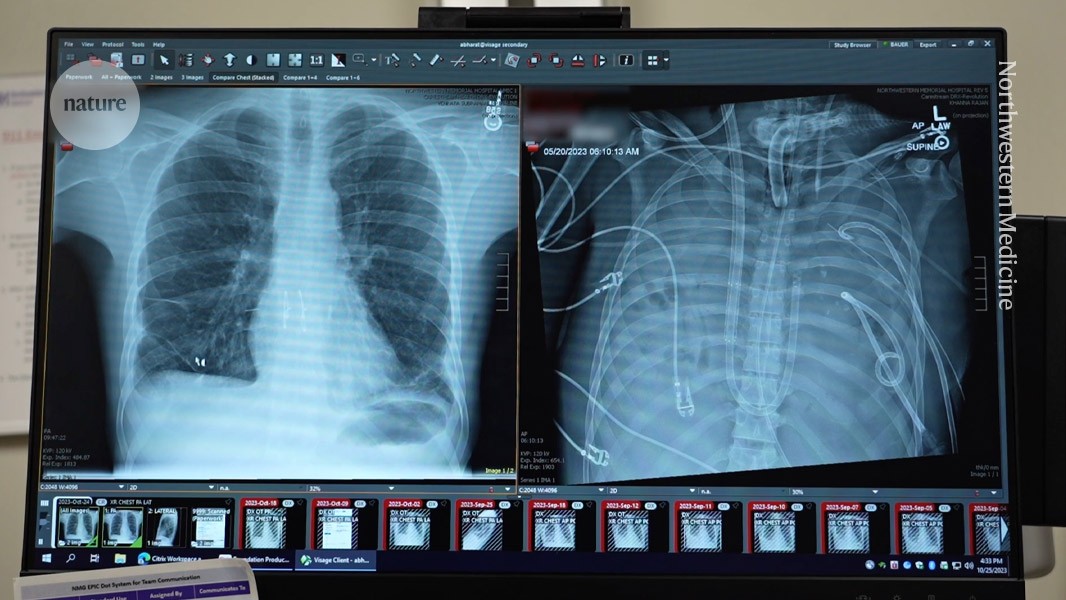
"A 33-year-old man survived for 48 hours without his lungs, after a medical team replaced the organs with an external artificial-lung system that it developed to keep him alive until he could receive a double lung transplant. There have been cases in which people have had their lungs removed and been connected to an external device to maintain oxygen levels."
"Bharat says his team's design is unique because it maintains a balanced and continuous flow of blood to the heart, reducing the risk of blood clots that could trigger a heart attack. The findings were published today in the journal Med. The engineering behind the artificial-lung system is remarkable, says Natasha Rogers, a transplant clinician at Westmead Hospital in Sydney, Australia."
"Before being placed on the artificial-lung system, the man had developed acute respiratory distress syndrome - an often-life-threatening condition in which the lungs cannot absorb enough oxygen - triggered by the influenza virus. He was then placed on a ventilator but developed a drug-resistant Pseudomonas aeruginosa infection. The infection caused parts of his lungs to fill with pus, and he went into septic shock, at which point his heart and kidneys began to fail."
A 33-year-old man survived 48 hours without lungs after an external artificial-lung system replaced his organs and maintained oxygenation until a double lung transplant became possible. The system preserves balanced, continuous blood flow across the heart to allow normal cardiac function and reduce the risk of blood clots. The patient developed acute respiratory distress syndrome triggered by influenza, then a drug-resistant Pseudomonas aeruginosa infection that filled portions of his lungs with pus and led to septic shock, cardiac arrest, and kidney failure. The external artificial-lung device offers a potential bridge for critically ill patients to recover enough to undergo lung transplantation. Findings appeared in Med.
Read at Nature
Unable to calculate read time
Collection
[
|
...
]