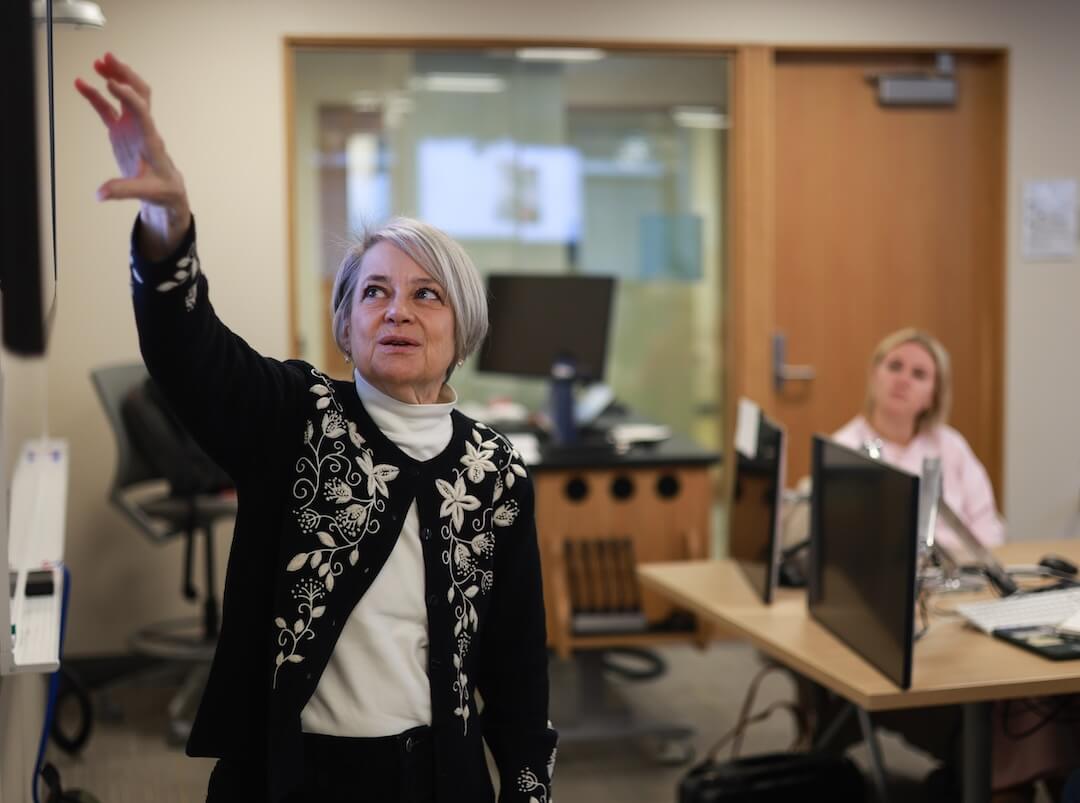
"We learned how to treat bullet wounds, how to tie a tourniquet, and I was thinking a 21-year-old student should not have to pack bullet wounds."
"All four of them were out Friday at the marches and Saturday they were at vigils."
"At least I know something I didn't know before."
"What is the difference between a 'constitutional observer' and a reporter? There are a lot of people out there recording video and audio; very few of them are practicing 'journalism.' I try to remind students of the unique role they play. It is not a value judgment of on"
In the opening week of a new semester, roughly 3,000 immigration, Border Patrol and Department of Homeland Security agents arrived in Minneapolis as part of Operation Metro Surge. A University of Minnesota journalism professor accompanied four students to hostile-environment and first aid training led by journalists experienced in war coverage. Students learned to treat bullet wounds and tie tourniquets; the training galvanized them to attend marches and vigils. Faculty with decades of journalism and teaching experience emphasized distinctions between journalists and bystanders who document violence. Professors highlighted tensions between constitutional observers and reporters and stressed the responsibilities unique to practicing journalism amid shootings, arrests and protests.
#journalism-education #hostile-environment-training #protests #first-amendment #immigration-enforcement
Read at Poynter
Unable to calculate read time
Collection
[
|
...
]