""I had an amazing life," the statement said. "I gave it everything I had. If you got any benefits from my work, I'm asking you to pay it forward as best you can. That is the legacy I want. Be useful. And please know I loved you all to the very end.""
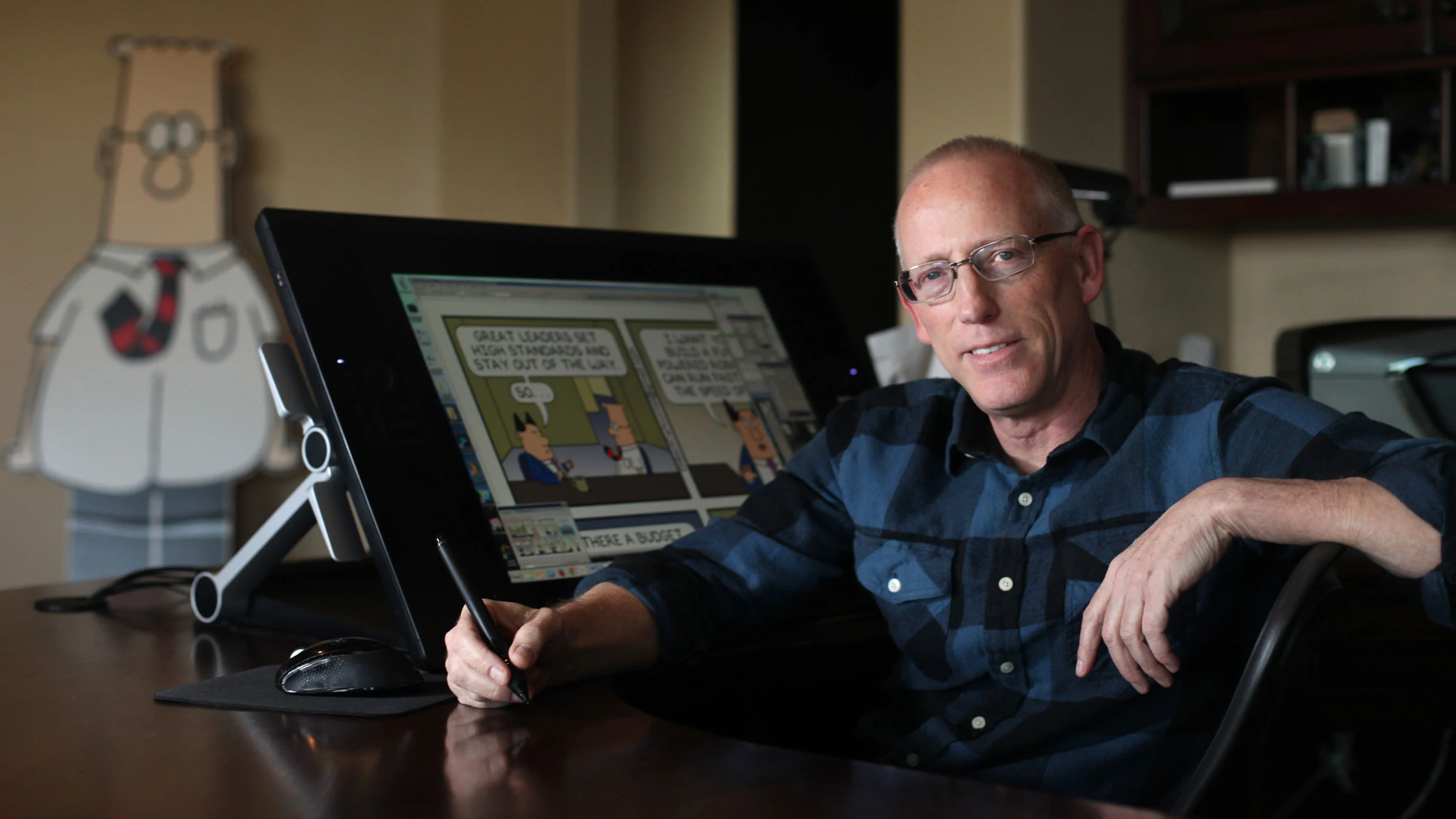
"Dilbert was first created in 1989, and it broke new ground, as the comic offered a refreshing and pointed critique of white-collar work life. It became known for its ever-relatable digs about the drudgery of office culture and insufferable bosses, long preceding relatable movies and TV shows like Office Space and The Office, which offered similar dismal (and hilarious) views of work culture years later.In its heyday, the comic strip appeared in over 2,000 newspapers worldwide, with an estimated readership of more than 150 million. Adams's strip amassed such popularity that he was named the 1997 recipient of the National Cartoonist Society's Reuben Award. In the same year, Dilbert (the character) became the first fictional person to make Time magazine's list of the most influential Americans."
Scott Adams died January 13 at age 68 after announcing metastatic prostate cancer the previous spring. His former wife Shelly Miles shared his prewritten statement during a livestream and read his message asking people to pay his work forward and to be useful. Dilbert debuted in 1989 and provided a pointed critique of white-collar work life, satirizing office drudgery and bad bosses. At its peak, Dilbert ran in more than 2,000 newspapers with an estimated readership over 150 million and earned Adams the 1997 Reuben Award and a spot on Time's list. In 2023, hundreds of papers dropped the strip after Adams made racist remarks on his podcast; Adams said his comments were taken out of context.
Read at Fast Company
Unable to calculate read time
Collection
[
|
...
]