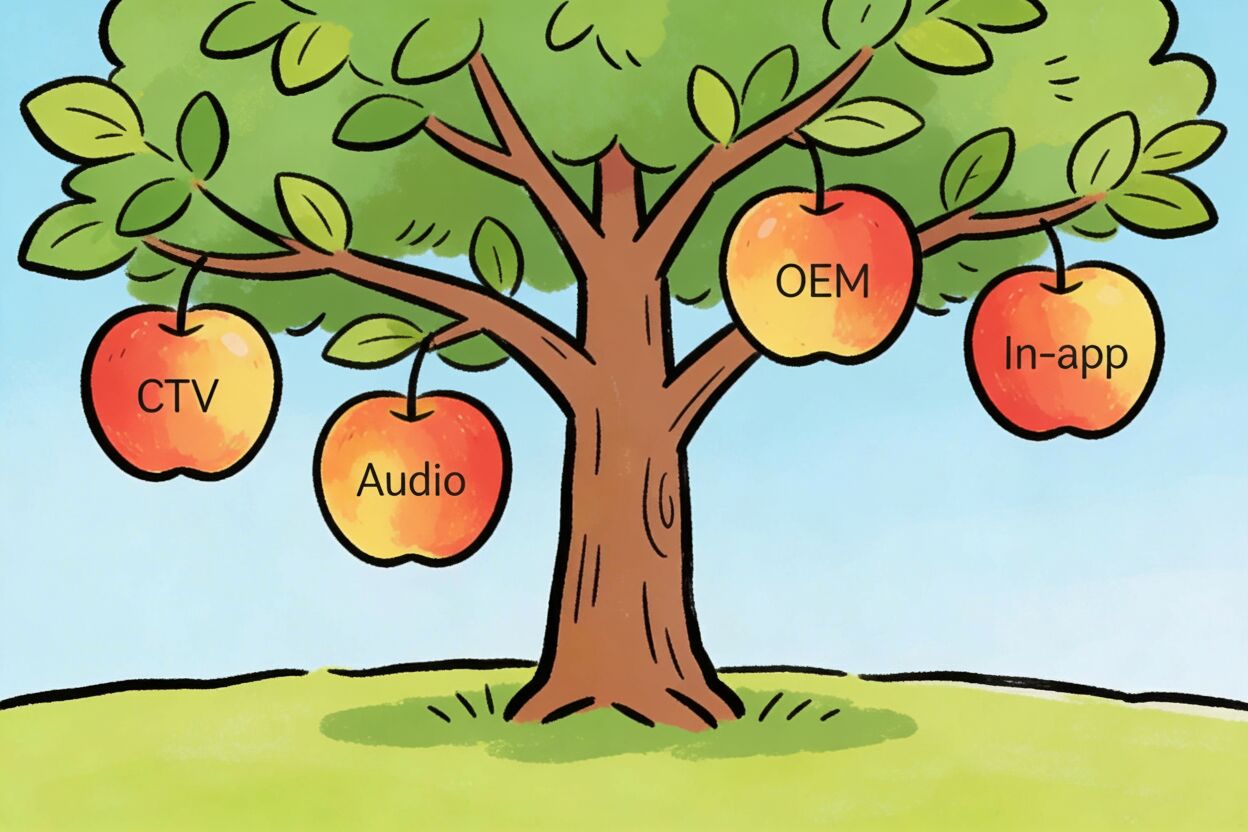
"The core challenge lies in the fragmentation of decision-making. Each environment, whether mobile in-app, web, CTV, OEM inventory, or emerging formats, operates with its own identity frameworks, auction dynamics, measurement standards, and latency. When advertisers attempt to unify them, they discover that what seems like one ecosystem is actually a collection of parallel systems optimised for different truths. Another major hurdle is signal asymmetry. Some channels are rich in deterministic signals, others rely on probabilistic or contextual inputs."
"When these signals are isolated, media teams are forced to optimise locally instead of globally. That leads to duplicated reach, inefficient frequency, and missed marginal gains. Ultimately, unification requires moving away from channel-centric thinking and toward outcome-centric management. So that media decisions are made based on incremental value, not where an impression happens to be delivered."
Programmatic buying is fragmented across mobile in-app, web, CTV, OEM inventory, and emerging formats, each with distinct identity frameworks, auction dynamics, measurement standards, and latency. Signal asymmetry forces local optimisation when deterministic, probabilistic, and contextual inputs cannot be reconciled, producing duplicated reach, inefficient frequency, and missed marginal gains. Modern planning shifts from channel-centric to outcome-centric management that prioritises incremental value over impression location. Cross-device strategies spanning mobile, web, and CTV can drive measurable growth when paired with AI agents for optimisation, rigorous incrementality testing, and next-generation data management that balances privacy with performance.
#programmatic-omnichannel #cross-device-strategy #signal-asymmetry--measurement #outcome-centric-media-planning
Read at Exchangewire
Unable to calculate read time
Collection
[
|
...
]