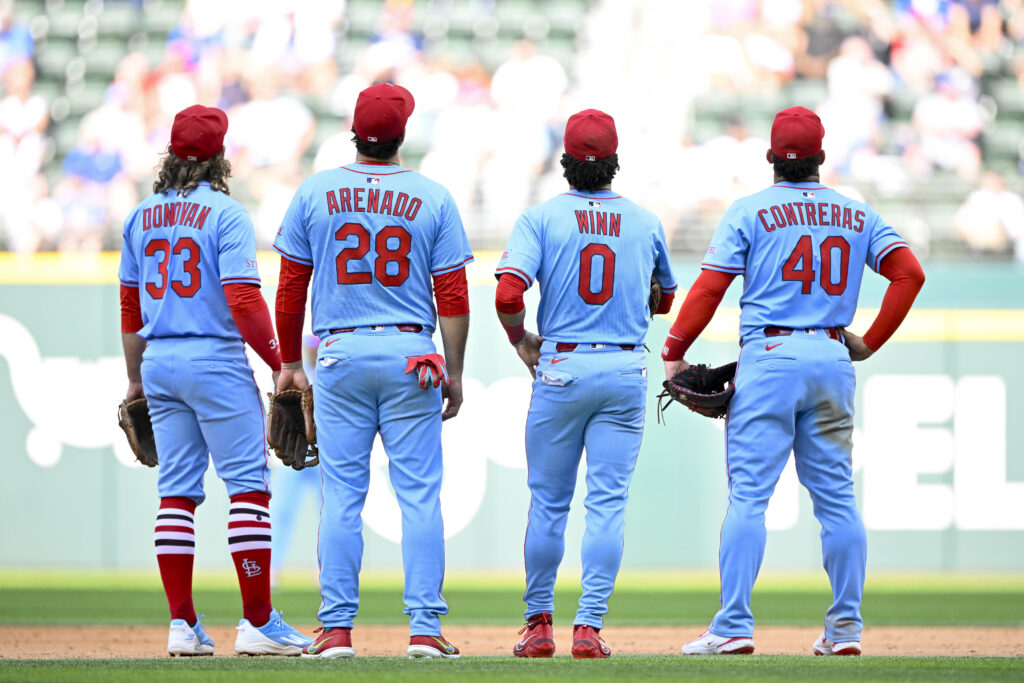
The Cardinals shifted toward a rebuild approach during the 2025-26 offseason under new baseball operations leader Chaim Bloom. With payroll constraints following the collapse of their local broadcast deal, the organization prioritized acquiring long-term talent over immediate big league improvements. Bloom communicated this direction to veteran players holding no-trade clauses, including Gray, Contreras, and Arenado. The team strategically traded away these higher-paid veterans first, as their expensive contracts and no-trade protections limited their trade value and the pool of interested teams. This proactive approach aimed to open playing time for younger players while reducing financial obligations.
"St. Louis was reasonably competitive last year and finished within a few games of .500. At the same time, it was clear ownership was pulling back payroll as their local broadcast deal teetered on the brink of collapse - which finally happened this winter after Main Street Sports defaulted on a rights payment. If they weren't going to invest to fix the pitching staff, they needed to more proactively strip things down."
"Bloom may never have used the term 'rebuild,' but it was obvious between the lines. He said that adding a long-term influx of talent to the organization took priority over immediate upgrades to the big league club. Bloom also made the direction clear to a trio of veteran players who had say over their fate in the form of no-trade clauses."
"In all three cases, the primary motivations for the Cardinals were in shedding money and opening playing time for younger players. Gray, Contreras and Arenado all remain solid or better players, but none of them had immense trade value. Gray's and Arenado's respective contracts were above market value, in fact, while the remaining two years and $41.5MM on the Contreras deal felt about right for what he'd earn if he were a free agent."
Read at MLB Trade Rumors
Unable to calculate read time
Collection
[
|
...
]