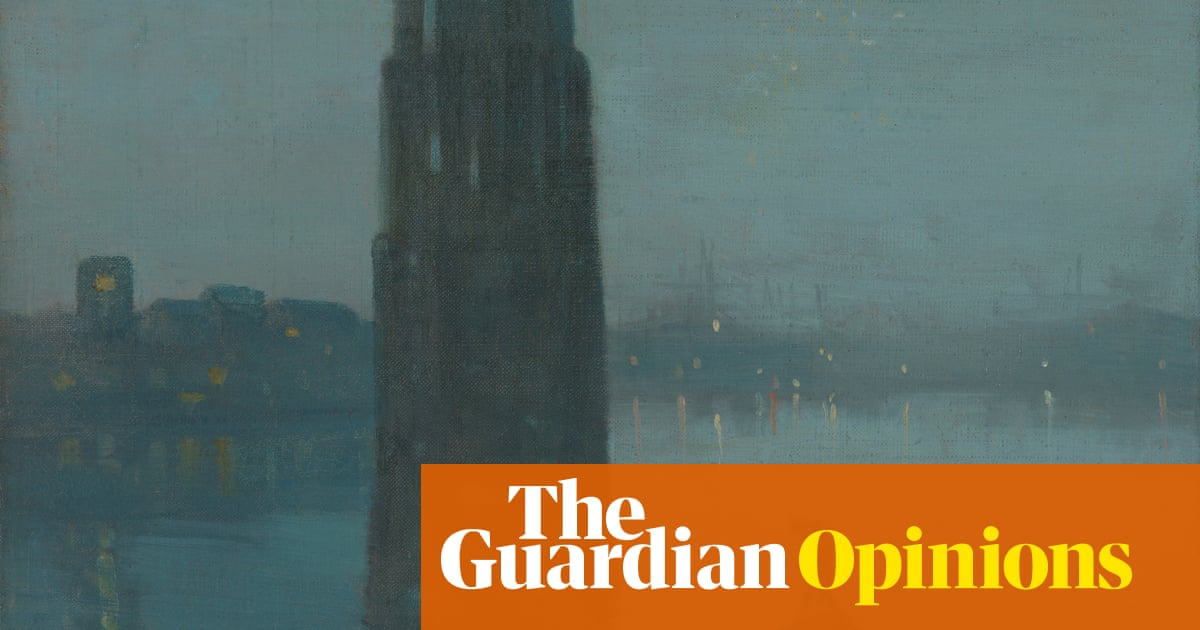
Whistler’s work connects painting to music through titles, form, and expression. Paintings are named using musical conventions such as arrangement, symphony, harmony, and nocturne, including works like “Arrangement in Grey and White No 1,” “Symphony in White, No 1: The White Girl,” and “Harmony in Grey and Green.” His Nocturnes, especially Thames scenes at twilight, take their titles from Chopin’s Nocturnes and related musical nocturnalia. Whistler links the arts by stating that music is the poetry of sound and painting is the poetry of sight. He argues that painting should stand alone and appeal to artistic senses without relying on unrelated emotions or storytelling.
"A painting can be experienced in a second's contemplation or an hour's, but a piece of music, be it symphony or sonata, has to be journeyed through for just as long as the performance lasts. And yet, the week the James McNeill Whistler exhibition opens at the Tate in London (here's Jonathan Jones's five-star review), I'm having to reconsider. Whistler was profoundly influenced by music, a connection that goes so deep that the results aren't only aesthetic but visceral, in the fabric of the form and expression of his pictures and his philosophy of painting."
"Whistler titled his pictures using the abstract conventions of music. Arrangement in Grey and White No 1, a painting of his mother; Symphony in White, No 1: The White Girl, a picture of his mistress Joanna Hiffernan; or Harmony in Grey and Green, a portrait of Miss Cicely Alexander. And above all, there is the series of Nocturnes, most especially of the Thames at twilight, taking the title from Chopin's Nocturnes and the whole history of musical nocturnalia that Susan Tomes's new book describes."
"As Whistler said in 1875, As music is the poetry of sound, so is painting the poetry of sight, and the subject matter has nothing to do with harmony of sound or of colour Why should I not call my works symphonies', arrangements', harmonies', and nocturnes'? I know that many good people think my nomenclature funny and myself eccentric'."
"The vast majority of English folk cannot and will not consider a picture as a picture, [standing] apart from any story which it may be supposed to tell Art should be independent of all clap-trap should stand alone and appeal to the artistic sense of eye or ear, without confounding this with emotions entirely foreign to it, as devotion, pity, love, patriotism and the like."
Read at www.theguardian.com
Unable to calculate read time
Collection
[
|
...
]